
As hydrangea blooms begin to fade and turn brown in the fall, many gardeners wonder if they can safely cut them off before winter arrives. Although cutting away those old flowers might seem like a harmless way to tidy up your landscape, how and where you make the cut can have a big impact on next year’s blooms.
The good news is that you can remove old hydrangea flowers in the fall. But if you decide to do it, it is extremely important to snip off only the spent flower head. Cutting too far down the stem can remove old wood and the flower buds it holds for next year.
This is especially important with bigleaf, mountain and oakleaf hydrangeas. These popular varieties bloom primarily on old wood, which means they form many of their flower buds for the following year during late summer and fall.
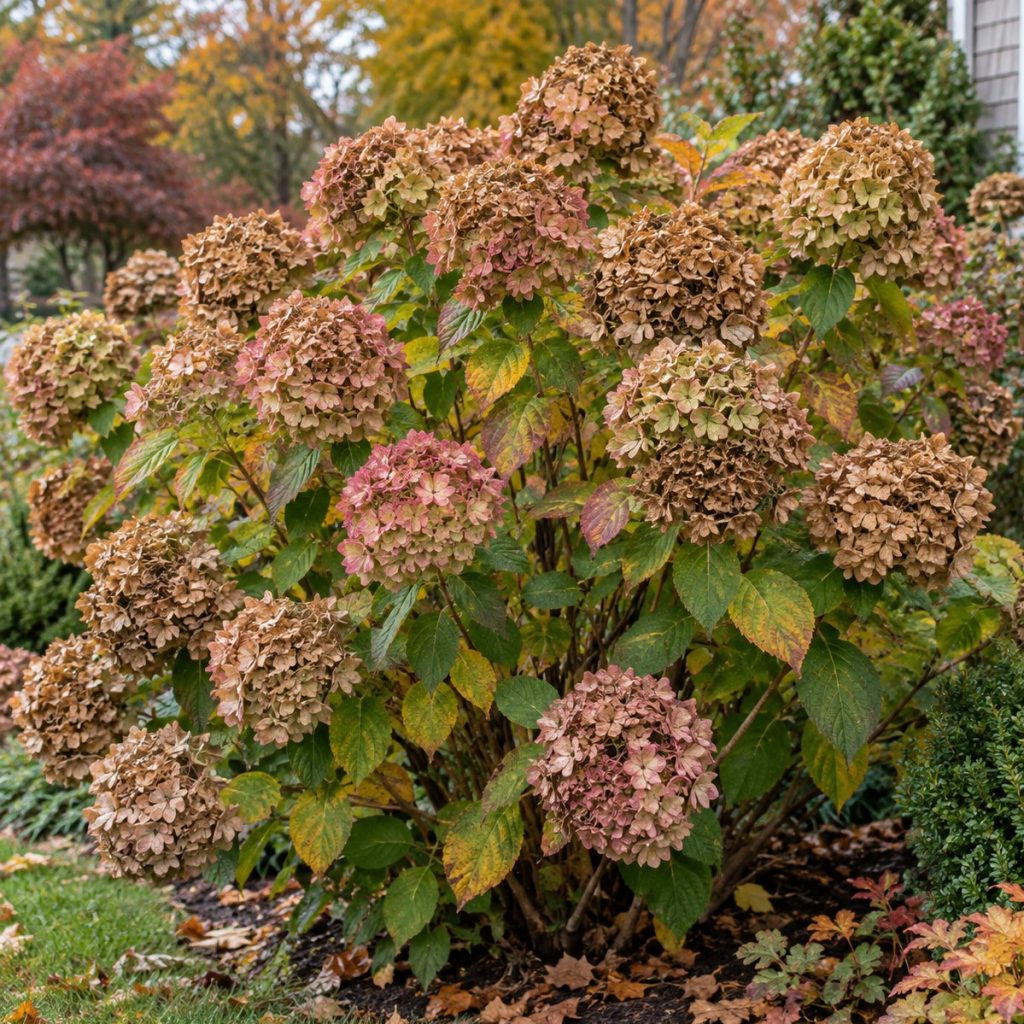
Unfortunately, those buds can be difficult to see. And once they are removed, there is no way for the plant to replace them in time for next year. With that in mind, here is a look at how to safely remove old hydrangea blooms in the fall – along with how to water, mulch and care for your bushes before winter!
Can You Cut Old Hydrangea Blooms In The Fall?
The Truth About Fall Hydrangea Care
For starters, know that removing old hydrangea blooms in the fall is purely optional. Leaving the faded flowers in place will not harm the plant in any way. In fact, many gardeners prefer to leave them on through winter because the dried blooms add texture and interest to an otherwise bare landscape.
The dried flower heads can be especially attractive when covered with frost or a light layer of snow. They can also provide the ends of the stems with a small amount of protection from harsh winter winds and rapidly changing temperatures.
However, if you prefer a cleaner and more manicured appearance, you can remove the old blooms. The key is to treat the process as deadheading and not pruning. There is a big difference between snipping off an old flower and cutting back an entire stem.
To safely remove a faded bloom, use a clean, sharp pair of hand pruners. Follow the stem down only to the first set of healthy leaves or buds directly beneath the flower head. Make your cut just above that point, removing as little of the stem as possible.
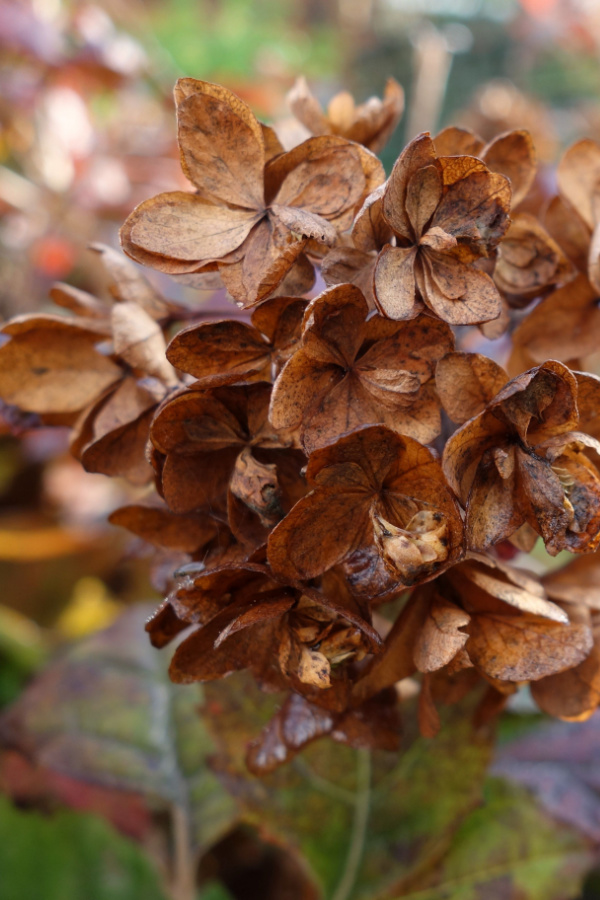
Even better, you can simply cut off old hydrangea blooms through the thin stem immediately below the dried flower. The less stem you remove, the less chance you have of accidentally cutting away next year’s blooms.
Always Avoid Heavy Pruning In The Fall
Not all hydrangeas bloom in the same way. Some produce flowers on old wood, while others bloom on new growth that develops in the spring. There are even reblooming varieties that can produce flowers on both old and new wood.
But unless you know exactly which type of hydrangea you have, the safest choice is to avoid any serious fall pruning. Simply remove cut back individual hydrangea blooms if desired and leave the rest of the stems alone until you can identify the plant and its proper pruning schedule.
Fall is not the time to reshape an overgrown hydrangea or reduce its overall size. Even hydrangeas that flower on new wood are usually better left standing through winter and pruned closer to the end of winter or the beginning of spring.
Heavy fall pruning can stimulate the plant to produce tender new growth if warm weather returns. That young growth will not have enough time to harden before freezing temperatures arrive. Not only will it die back, it can also use valuable energy the plant needs to prepare for winter.
All healthy stems should remain in place. Even if the plant looks a little untidy after its leaves fall, those stems may contain every flower bud it needs to produce a beautiful display next year.


Do Not Fertilize Hydrangeas In The Fall
One of the most important rules for fall hydrangea care is to stop fertilizing. Hydrangeas should not receive high-powered fertilizers as they begin heading toward winter dormancy. Fertilizing in the fall can encourage the plant to send out fresh leaves and tender stems. This late growth is highly vulnerable to frost and freezing temperatures. When it dies back, it can leave the plant stressed and more susceptible to winter damage.
Late fertilizing can also interfere with the natural hardening-off process. As daylight decreases and temperatures cool, a hydrangea needs to slow its growth and store energy in its roots. Feeding it at this point can keep it growing when it should be preparing to rest.
For most hydrangeas, the best time to fertilize is in early spring as new growth begins. If an additional feeding is needed, it can be applied in late spring or very early summer. After that, it is best to allow the plant to finish the season naturally. See our article: How To Feed Hydrangeas The Right Way
Keep Watering Until The Ground Freezes
Although you should stop fertilizing hydrangeas in the fall and not cut off the old bloom stems too far down, you should not stop watering them. Hydrangeas need consistent moisture as they prepare for winter, especially when autumn weather is warm or dry.
A plant that enters winter dehydrated is far more likely to suffer damage. Its stems and buds can dry out during cold, windy weather, and its root system will have fewer moisture reserves to help it survive until spring.
Continue watering whenever the soil becomes dry. Established hydrangeas usually benefit from about one inch of water per week from rain or supplemental watering. Newly planted bushes may need to be checked more frequently because their roots have not yet spread deeply into the surrounding soil.
Just remember – when it comes to caring for hydrangeas in the fall, less is usually more. If the old blooms do not bother you, leave them in place until late winter or spring. They can provide winter interest while helping protect the tips of the stems.
By resisting the urge to cut back your old hydrangea blooms too far and by keeping your hydrangeas properly watered – you can help protect their roots, stems and flower buds through winter. And even more, give your bushes the best possible chance to return with healthy growth and loads of beautiful blooms next year!
The Simple Garden Life
Follow Our Facebook Page For Even More Great Tips! Simple Garden Life Facebook Page
Simple Garden Life is a website dedicated to keeping gardening fun, simple and enjoyable! We publish two new articles each week along with a new garden podcast episode every two weeks. This article may contain affiliate links.