The Best Herbs To Grow In A Sunny Window Indoors - All Winter Long!
Did you know that you can grow a whole slew of herbs indoors all winter long in a sunny window - without any need for fancy grow lights or special equipment?
It's true! Just because cold weather has ended your outdoor gardening season doesn’t mean you have to stop growing fresh herbs. With a few small pots and a sunny window, you can keep delicious flavor close at hand all winter long!
But choosing the right herbs makes a big difference. Some adjust to indoor conditions far better than others. And when you are relying on window light during the shortest days of the year, starting with dependable plants can save plenty of frustration!
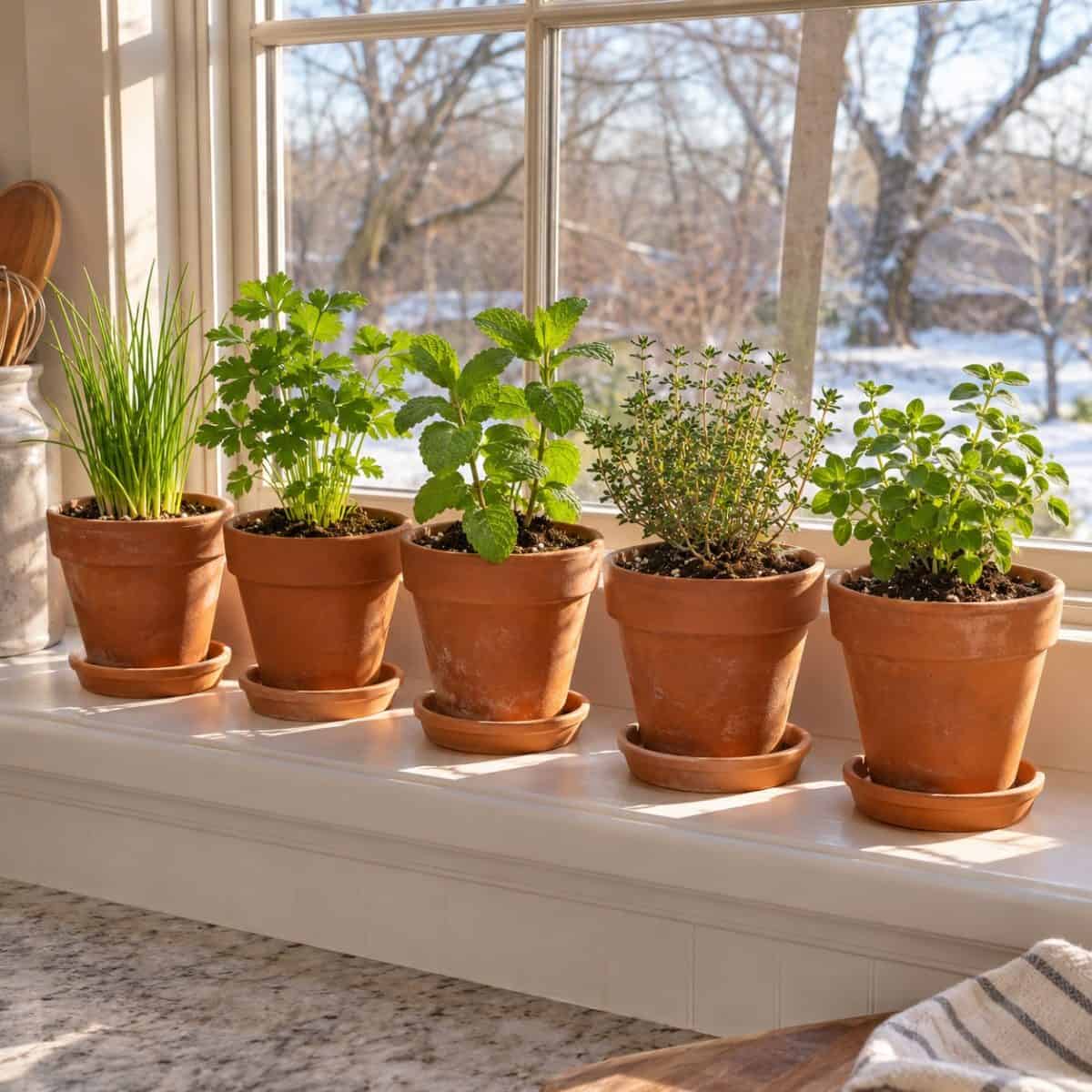
The Best Herbs To Grow In A Sunny Window
Finding The Best Sunny Window For Growing Herbs
Before selecting your herbs, take a little time to find the sunniest window in your home.
A bright room isn’t always enough. Most culinary herbs need direct sunlight to produce sturdy stems, healthy leaves and enough new growth for harvesting.
In the Northern Hemisphere, a south-facing window usually offers the best opportunity for winter growing. A sunny west-facing window can also work well. An east-facing window may support herbs such as mint and parsley, but growth will often be slower.
For best success, you need around six hours of direct sunlight whenever possible. In addition, avoid locations with strong drafts or hot air blowing from a heating vent. But once you find your spot - it's time to grow - and here are some of the best and easiest of all to try!
Chives - Easy Flavor In A Small Pot
Chives are one of the easiest and most useful herbs to grow in a sunny window. Their slender green leaves take up little space, and a small cutting adds plenty of mild onion flavor.
Use them in scrambled eggs, soups, dips, potatoes and homemade salad dressings. Because you usually need only a few leaves at a time, even a modest plant can be useful.

For the quickest results, begin with an established potted plant. You can also divide an outdoor clump before the ground freezes and pot up a small section.
Harvest by cutting a few outer leaves near the base with clean scissors. Leave plenty of green growth behind to help the plant recover.
During winter, resist the temptation to cut the entire clump repeatedly. Growth is slower indoors, and the plant needs time to replace what you remove. If you use chives frequently, grow two pots and alternate your harvests.
Parsley - A Kitchen Favorite Worth Growing
Parsley is another excellent herb choice to grow in a window sill in the winter because it fits into so many everyday meals.
A handful of chopped parsley can brighten pasta, roasted vegetables, soups and sauces. Both curly and flat-leaf varieties can grow indoors, so choose whichever you enjoy using.
Starting with a young plant is the easiest way to get an earlier harvest. Parsley seeds can take several weeks to sprout, and the seedlings need additional time to develop. Give parsley a container with enough depth for its roots. A pot around eight inches deep is a useful starting point, provided it has drainage holes.
Keep the mix evenly moist without allowing it to become soggy. Water thoroughly when the surface begins drying, then empty any water that collects in the saucer.
To harvest, remove the older outer stalks near the base. Leave the smaller leaves in the center to continue growing.
Listen To Our Garden Podcast

Mint - A Forgiving Herb For Indoor Growing
If you want an herb that is useful, fragrant and relatively forgiving, mint is your plant! Spearmint is excellent for tea, fruit dishes and flavored water. Peppermint has a stronger flavor that works well in hot drinks and many desserts.
Although mint still benefits from a sunny location, it can tolerate somewhat less direct light than many Mediterranean herbs. That makes it worth trying when your best window receives only part of a day of sunshine.
Start with a purchased plant, rooted cutting or division from an established outdoor clump.
Harvest by snipping a stem just above a pair of leaves. This encourages branching and helps prevent the plant from developing only a few long stems.
Thyme - Small Leaves With Big Flavor
If you have a sunny window, thyme is a great addition to grow for your winter herb collection.
Its small leaves bring wonderful flavor to soups, roasted vegetables, poultry and slow-cooked meals. Because thyme has a concentrated flavor, you don’t need a large harvest to make a difference in the kitchen.

Common culinary thyme is a dependable choice. Lemon thyme is another option if you enjoy a light citrus flavor. Begin with an established plant rather than expecting a tiny seedling to provide winter cuttings.
Thyme needs excellent drainage. Let the upper portion of the potting mix dry between waterings, then water thoroughly and allow the excess to drain away.
Harvest tender green tips and leave most of the foliage intact. Don’t cut deeply into old, bare woody stems, especially when the plant is growing slowly.
Oregano - A Great Choice For Homemade Meals
Oregano is perfect for gardeners who enjoy making pizza, pasta sauce and hearty winter dishes.
Greek oregano is a good choice for a strong, familiar culinary flavor. Start with a small established plant so you have something to harvest sooner. Place oregano in one of your sunniest windows. Without enough light, its stems can become thin and stretched, with large spaces between the leaves.
Allow the surface of the potting mix to dry before watering. Like thyme, oregano struggles when its roots stay constantly wet. Snip stem tips just above a set of leaves to encourage branching. Take small amounts and watch how quickly the plant replaces them.
Why Basil And Rosemary Can Be More Difficult
Basil and rosemary are popular herbs, but they can be more challenging when you rely entirely on winter window light.
Basil prefers warmth and strong sunlight. Cold glass, drafts and short days can leave it struggling, even if the same plant grew beautifully outdoors.

Rosemary also needs excellent light, along with careful watering. Its roots shouldn’t remain soggy, but allowing the root ball to dry completely can cause serious damage. See our article: The Secrets To Growing Rosemary Indoors - Grow Fresh Rosemary As A Houseplant!
Both are worth trying if you have a particularly bright window and suitable conditions. For an easier first attempt, however, chives, parsley and mint are better places to begin.
A FEW FINAL TIPS
Use containers with drainage holes, even if you plan to display them inside decorative pots.
Remove the growing pot from its outer container when watering. Let it drain before placing it back so water doesn’t collect around the roots. Fill containers with a quality potting mix rather than soil dug from the garden. Garden soil can become compacted in pots and hold too much moisture.
Keep each herb in its own container. That allows you to adjust watering to the plant instead of treating thirsty mint and drought-tolerant thyme exactly alike.
Start with a few herbs you enjoy eating, give them your brightest window and adjust your harvests to their growth. Even a small windowsill garden can supply fresh flavor for plenty of winter meals!
You can also find starter kits that can allow you start a whole set of herbs indoors with seeds. It takes a bit longer - but it's great for those with no access to live plants. Affiliate Link: Indoor Herb Garden Kit, Culinary Herb Starter Kit
The Simple Garden Life
Follow Our Facebook Page For Even More Great Tips! Simple Garden Life Facebook Page
Simple Garden Life is a website dedicated to keeping gardening fun, simple and enjoyable! We publish two new articles each week along with a new garden podcast episode every two weeks. This article may contain affiliate links.