What To Do With Lavender In Late Fall – And Why Pruning Can Be A Big Mistake!
Wondering what to do with your lavender in late fall as its flowers fade and cold weather settles in? Although it can be tempting to grab the pruning shears and give plants a good trim, cutting lavender back hard now can create far more problems than it solves!
When it comes to getting lavender through winter, its needs are quite different from many other flowering plants. Unlike herbaceous perennials that die back to the ground, lavender keeps a permanent woody framework. And how you care for that framework in fall can make a big difference in how well plants survive and grow next year.
The good news? Getting lavender ready for winter usually requires very little work. In fact, doing less with your pruning shears and fertilizer can help your plants far more than a major fall cleanup ever could!
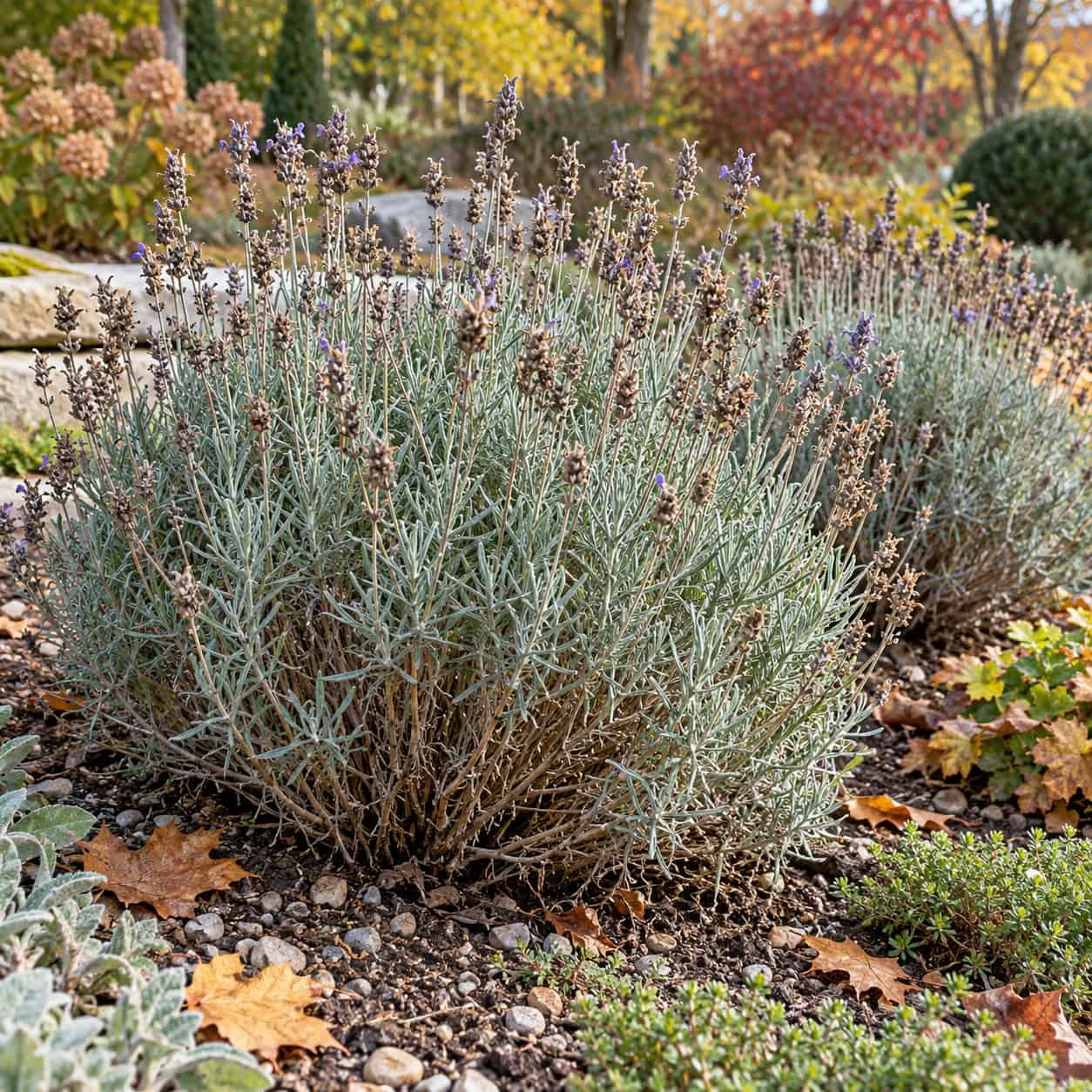
What To Do With Lavender In Late Fall
Why Heavy Pruning Can Be A Mistake
Lavender might look a little uneven or overgrown by late fall, especially if you did not trim it after flowering. But trying to reshape the entire plant just before winter is a risky way to tidy it up.
Heavy pruning removes leafy growth that plants need as they head into cold weather. It also leaves little time for recovery before freezing temperatures arrive. If warm weather follows the pruning, plants may produce tender new shoots that are easily damaged by the next hard freeze.
An even bigger problem comes from cutting too far down into the woody stems. Lavender does not reliably produce fresh growth from old, bare wood. Cutting below the leafy portion can leave sections permanently bare or cause entire branches to die.
That is why lavender should never receive the same fall haircut you might give a hosta or daylily. Cutting it close to the ground can severely damage an otherwise healthy plant. See: What To Do With Lavender In The Spring - How To Prune & More!
What You Can Safely Trim In Fall
For late fall, keep pruning limited to small, necessary cuts. A broken branch can be removed, and clearly dead or diseased material should be addressed. But save substantial shaping and size reduction for a better time of year.
If dried flower stalks are bothering you, you can snip them off without cutting deeply into the leafy stems underneath. There is no need to remove them for winter survival, however. Leaving a few spent stalks in place is perfectly fine.
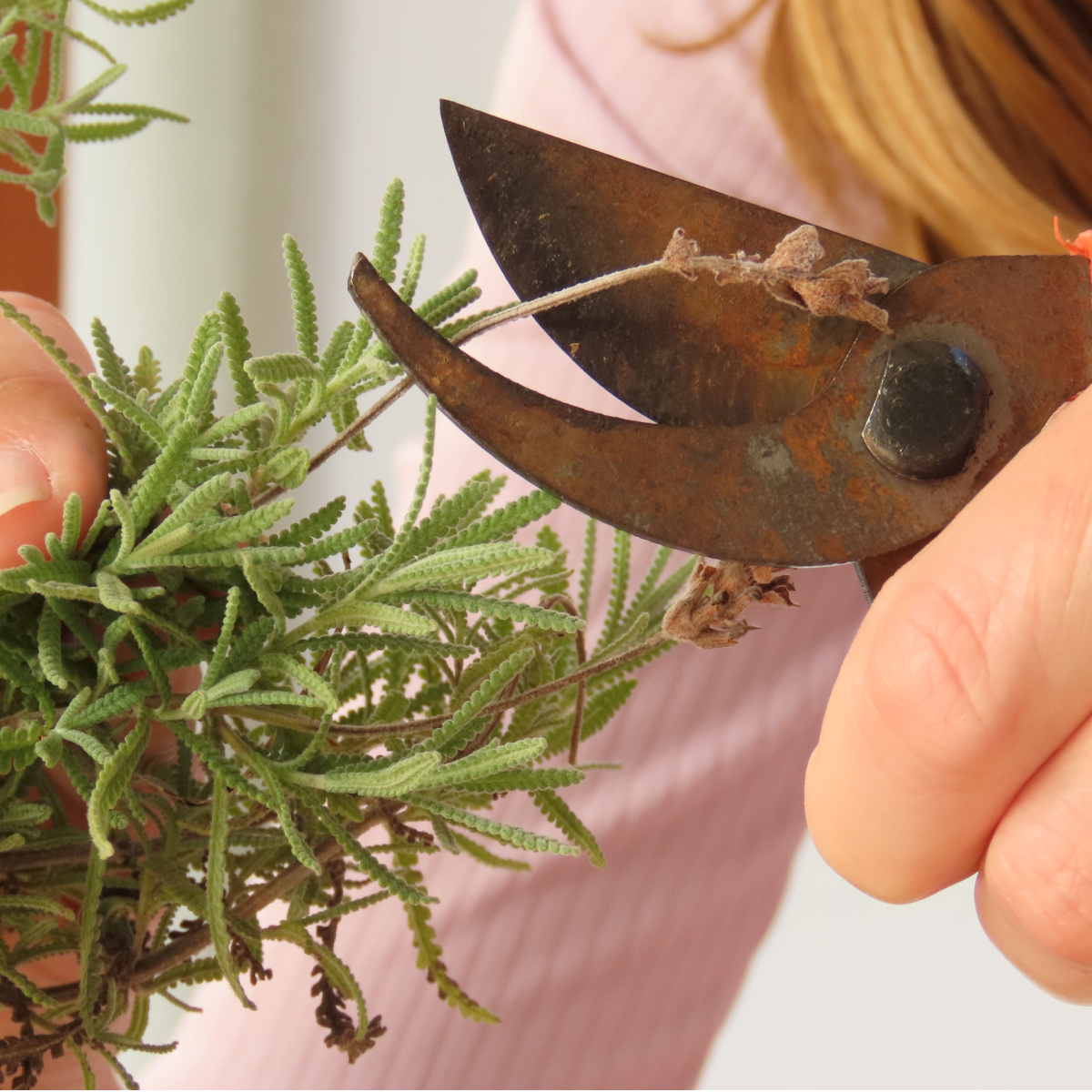
Be especially careful when deciding whether a branch is dead. Lavender foliage often looks duller during cold weather, and some plants develop a tired appearance without actually dying.
When you are uncertain, leave the branch until spring. Once new growth begins, it becomes much easier to see which stems survived and which need removing. A slightly untidy lavender plant is far better than one that has been cut back too aggressively!
Keep Wet Leaves And Heavy Mulch Away From Lavender In Late Fall
Fallen leaves can be wonderful for many parts of the garden, but a thick, wet pile around lavender is not helpful. Matted leaves hold moisture against the lower stems and crown, right where you want good airflow.
Gently remove leaves that collect inside the plant or pack tightly around its base. Pay particular attention after windy days, when loose leaves can quickly fill the center of a lavender plant.
Avoid burying the crown under compost, shredded bark or other moisture-holding materials. A deep blanket pressed against the stems can make an already damp location even wetter.
The goal is to protect the growing environment without packing the plant in wet material. For lavender, an open crown and freely draining soil are especially valuable heading into winter.
Listen In To Our Garden Podcast Below

Stop Fertilizing Lavender In Late Fall
If your lavender looks worn out after a long growing season, fertilizer might seem like the perfect way to help it recover. But late fall is not the time to push fresh growth.
Lavender naturally performs well in relatively lean soil. Too much fertilizer, especially nitrogen, can encourage soft, sprawling growth and fewer flowers. Applying it as winter approaches adds an unnecessary push when plants should be slowing down.
Skip liquid plant food, lawn fertilizer and rich manure around your lavender this time of year. There is also no need to pile nutrient-rich compost against the base as a winter boost.
For established plants growing reasonably well, routine feeding may not be needed at all. Giving lavender the right conditions is far more useful than feeding it simply because the calendar says fall.
Water Carefully As Temperatures Drop
Lavender needs less frequent watering as temperatures cool, but that does not mean every plant should be ignored until spring.
Recently planted lavender may still need occasional water during an extended dry spell. Established plants in the ground often require much less attention, especially when regular fall rain is keeping the root zone moist.

Check the soil before watering. If it is still damp beneath the surface, wait. If it has dried and the plant needs moisture, water the soil thoroughly and allow excess water to drain away.
Container plants deserve extra attention because their soil can dry out even in cool weather. Check them periodically, but never leave their pots sitting in saucers of water.
Give Potted Lavender The Right Winter Protection
Lavender growing in a pot faces an additional challenge in late fall and winter. Its roots are exposed to colder temperatures than roots insulated by garden soil.
Make sure the container has open drainage holes and is made from a material that can withstand freezing conditions. Move it away from places where roof runoff or melting snow will continually soak the pot.
In colder climates, a sheltered location or suitable unheated space may help protect a hardy variety. Keep checking the soil so the roots do not become completely dry.
The variety matters, too. English lavender is generally more cold hardy than French or Spanish lavender, although hardiness varies among cultivars.
A little restraint in late fall can go a long way toward keeping lavender healthy, attractive and ready for another season of fragrant blooms!
The Simple Garden Life
Follow Our Facebook Page For Even More Great Tips! Simple Garden Life Facebook Page
Simple Garden Life is a website dedicated to keeping gardening fun, simple and enjoyable! We publish two new articles each week along with a new garden podcast episode every two weeks. This article may contain affiliate links.
More Fall Plant Care
- Why You Need To Save Your Coleus In October - Before One Cold Night Ends It All!
- The 3 Best Things You Can Do For Your Hydrangeas In October - And What You Shouldn't!
- 5 Perennial Flowers You Can Still Divide In October – Fill Your Flowerbeds Now For Next Year!
- The Best Cover Crop To Plant In Your Garden This Fall – And Why!