The 3 Best Ways To Keep Bushes & Shrubs Safe From Deer In The Winter
Looking for some of the best methods and ways to keep your bushes, shrubs, trees and other plants safe from deer this winter?
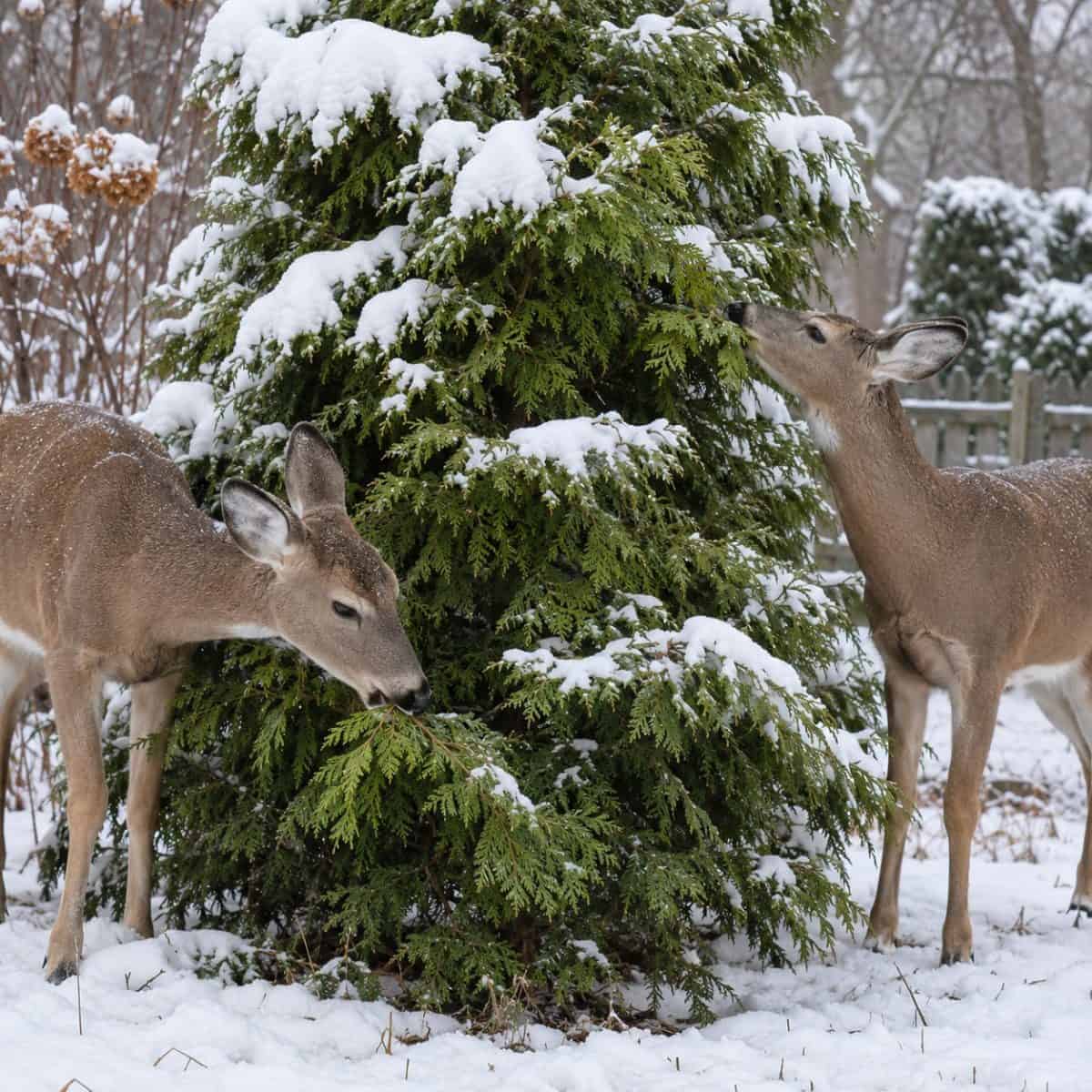
It’s amazing how fast deer can change the look of a landscape in the middle of winter. One week, the arborvitae along the driveway are green and full. The next, their lower branches are bare, the tips are gone.
As winter wears on, snow can cover low-growing food and leave deer looking for whatever they can reach. That includes evergreen foliage, tender twigs and the buds your flowering shrubs have been holding since fall.
The best way to protect a favorite shrub is to put a barrier between the deer and the branches. A simple wire cage works well for individual plants, and a temporary fence can protect an entire bed. Repellents can help with shrubs you can’t easily enclose, especially if you start using them before deer make your yard a regular stop.
How To Keep Bushes & Shrubs Safe From Deer In The Winter
Start With The Shrubs Deer Are Most Likely To Eat
If you have a lot of landscaping, start with the plants that took a beating last winter. Deer often follow the same routes through a yard. Look at the shrubs beside those routes, along the edge of the woods and near openings in hedges or fences.
Arborvitae and yews are worth protecting early, especially if you rely on them for privacy. When deer strip an arborvitae back to bare old wood, those branches can stay bare for years.
Young evergreens are particularly easy to browse because so much of the plant is within reach. Check your flowering shrubs, too. Deer can snip off the tips of azaleas and hydrangeas without doing much harm to the overall shape.
But if the shrub blooms on old wood, some of next year’s flower buds may go with those tips. Bigleaf and oakleaf hydrangeas are good examples. If you’ve ever had a healthy-looking hydrangea leaf out beautifully and produce only a handful of flowers, winter browsing can be the issue.
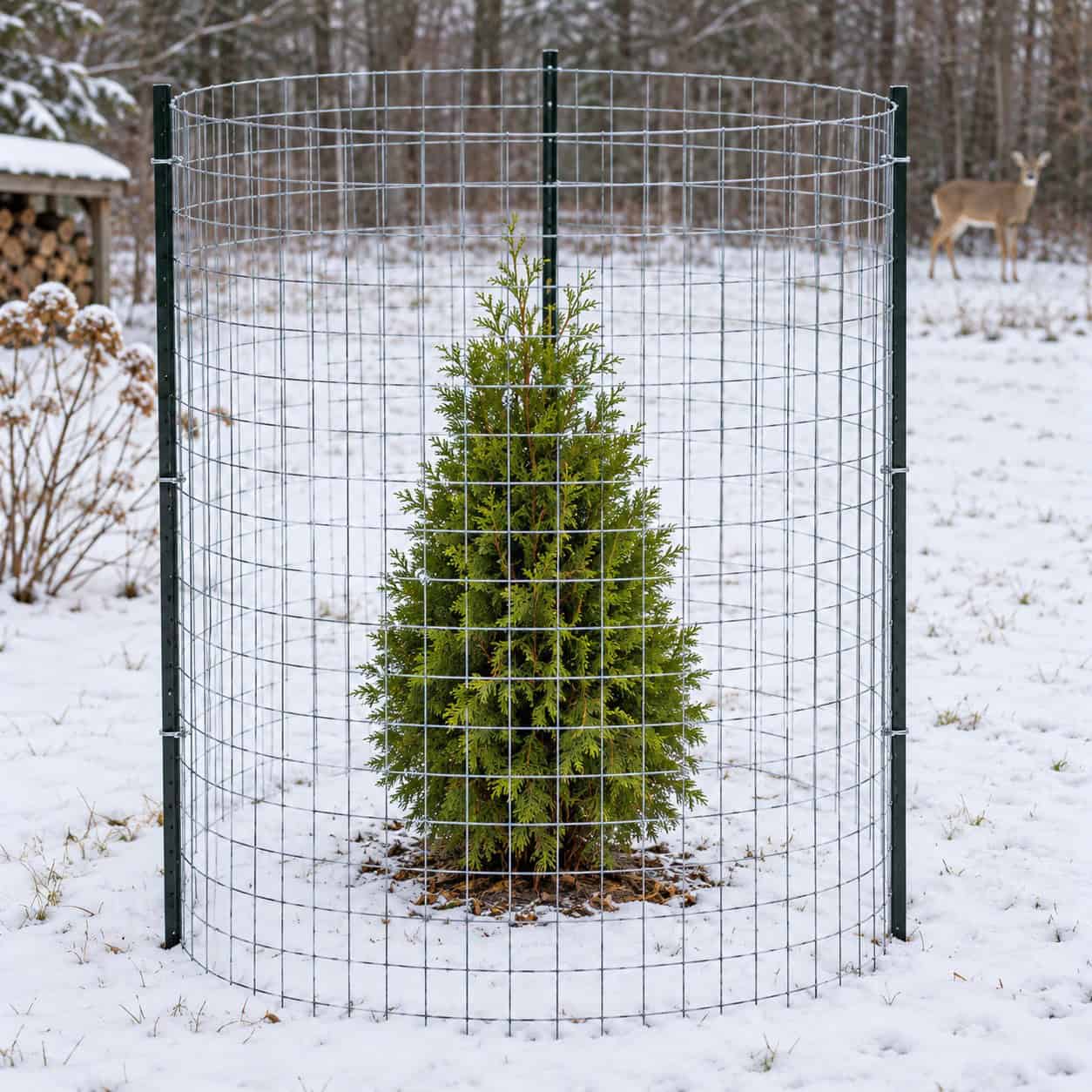
A Wire Cage Is The Best Way To Keep Your Most Vulnerable Shrubs Safe
For a newly planted evergreen or a single shrub that deer visit every winter, a roll of welded wire and a few sturdy stakes can make a reusable guard. Set the stakes around the shrub, form the wire into a ring and fasten it to the stakes so it holds its shape.
The most important detail is the space between the wire and the shrub. A cage that hugs the branches leaves the tips right where deer can nibble them. Set the wire far enough out that the branches stay beyond reach, even where the plant is widest.
Height matters just as much. If deer can reach over the top, they may eat the upper shoots even when the sides are well protected.
Make the cage tall enough to keep those tips out of reach and allow for the snow that typically piles up around it. A drift can give deer a higher place to stand, especially along a driveway or behind a windbreak.
Fence The Whole Bed When Deer Keep Coming Back
If you have a row of arborvitae or a bed full of shrubs, it’s often easier to fence the planting as a group to keep your plants safe from deer. Walk the perimeter before driving the posts. Give yourself enough room between the fence and the plants for the branches to move in the wind without brushing against the mesh.
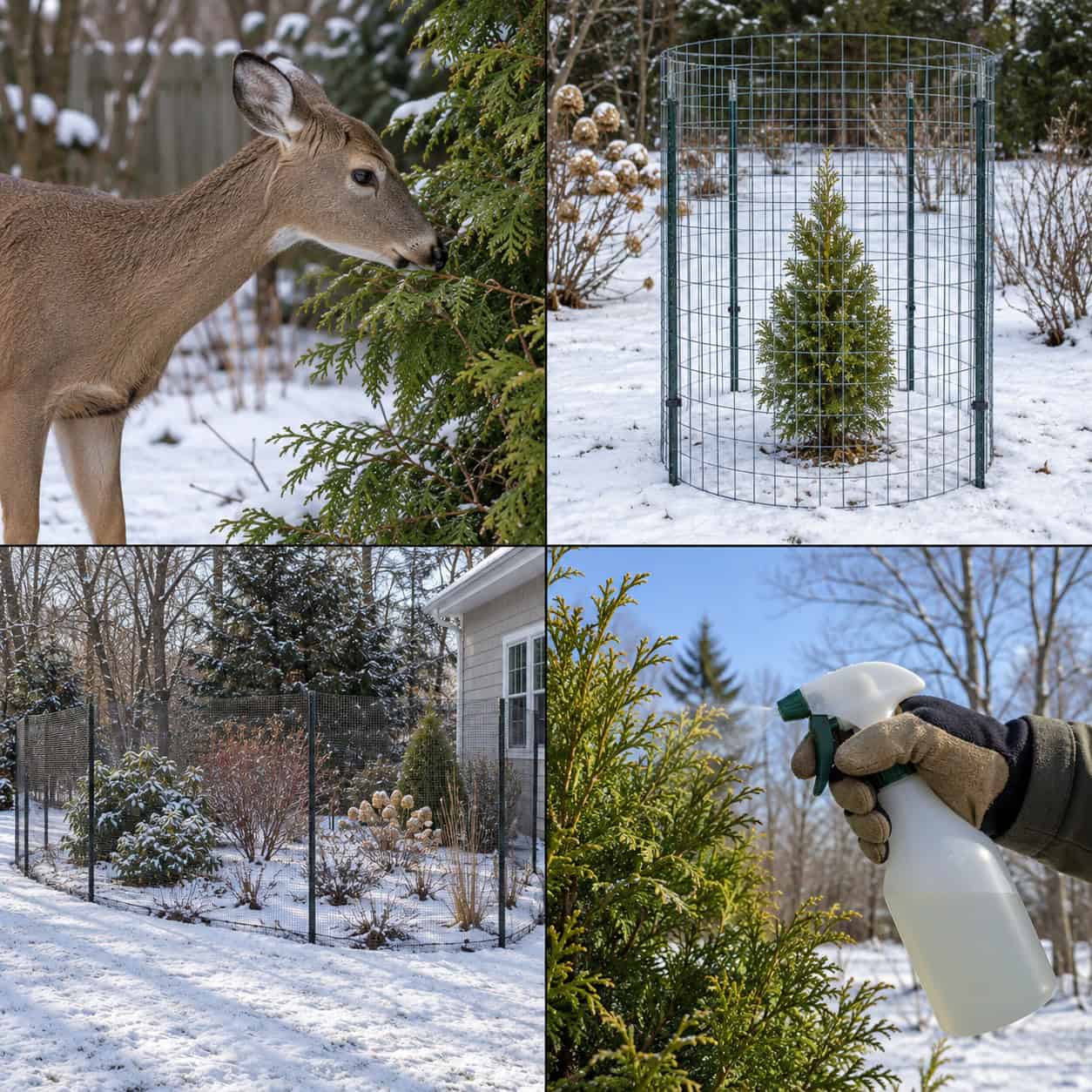
For an area wide enough for deer to jump into, use fencing designed to exclude deer. A fence around 8 feet tall is a common choice for a perimeter enclosure.
Keep the bottom close to the ground, particularly where the bed slopes or dips. A gap under the fence or an opening at the end of a hedge can undo the work you put into the rest of it.
If you use lightweight deer mesh for a temporary enclosure, pull it taut and fasten it securely along the posts. Make it easy to see along paths and anywhere animals regularly travel.
Check it after wet snow or strong winds, when sagging mesh can lean against the very branches you’re trying to protect. Rigid welded wire is often easier to manage around individual shrubs where you can use smaller sections.
Use Deer Repellent Before You See The First Damage
A deer repellent can be handy to keep shrubs safe from deer. Especially for a broad shrub that’s hard to cage, or for foundation plants where a fence would block a walkway. Choose a product labeled for the plants you want to protect and follow the label for application temperatures, drying time and how often to reapply.
Look for a dry stretch of weather so the product has time to dry on the plant. Pay attention to the branch tips and the side facing the deer trail. It’s easy to spray the front of a shrub from the walkway and miss the back, where deer can browse with some cover.
Put a reminder on your calendar to check the plants and follow the label’s reapplication directions. Rain, wet snow and winter thaws can shorten the life of a treatment, depending on the product.
Listen To Our Garden Podcast Below

Check Your Shrubs After Snowstorms And Late-Winter Thaws
A quick walk around the yard after a storm can save a lot of damage and help keep your shrubs safe from deer for the rest of winter. Look for stakes that have shifted, fresh tracks near a favorite shrub and branches that are suddenly sticking out through the wire.
If you do find chewed branches, look closely at the tips. Deer often leave ragged, torn ends. Rabbits tend to leave cleaner, angled cuts and are more likely to work lower on the plant, although deep snow can bring them within reach of higher branches.
Knowing which animal is doing the damage helps you decide whether to raise the barrier or close up gaps near the ground.
Keep protection in place through late winter and into early spring if deer are still passing through. A warm week can make it feel like winter is over, but swelling buds and fresh shoots can draw deer right back to the shrubs you’ve protected all season!
Last but not least - remember to plant "deer" smart. For more on that, check out our article: 5 Bushes Deer Don't Like To Eat - How To Plant Smart To Keep Deer Away!
The Simple Garden Life
Follow Our Facebook Page For Even More Great Tips! Simple Garden Life Facebook Page
Simple Garden Life is a website dedicated to keeping gardening fun, simple and enjoyable! We publish two new articles each week along with a new garden podcast episode every two weeks. This article may contain affiliate links.
More Winter Gardening
- The 5 Biggest Mistakes That Ruin Christmas Cactus Blooms - And How To Avoid Them!
- The One Thing Birds In Your Backyard Need Most In Winter - And How To Easily Give It To Them!
- Are Your Strawberry Plants Ready For Winter? How To Protect Strawberries In November!
- The Best Herbs To Grow In A Sunny Window Indoors - All Winter Long!