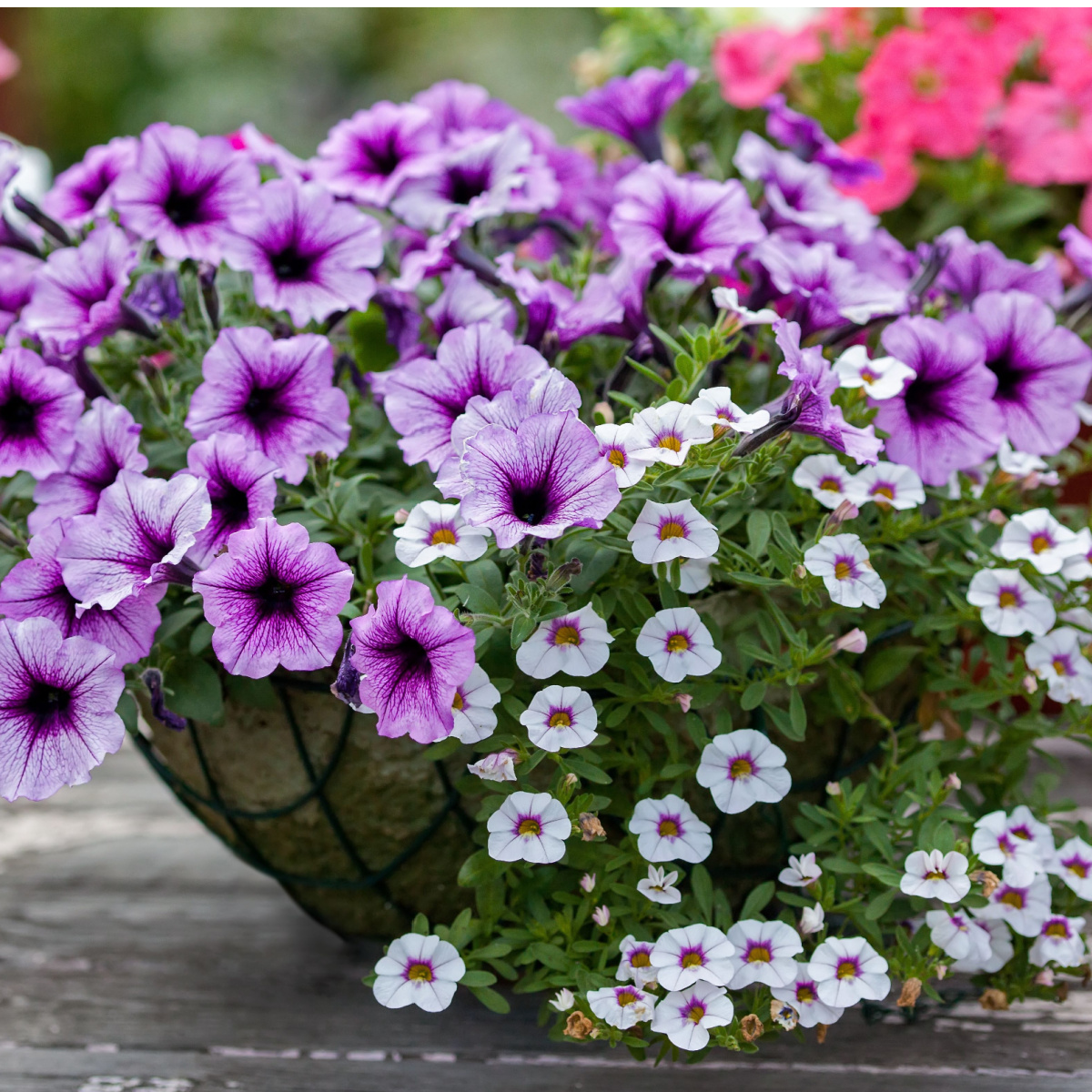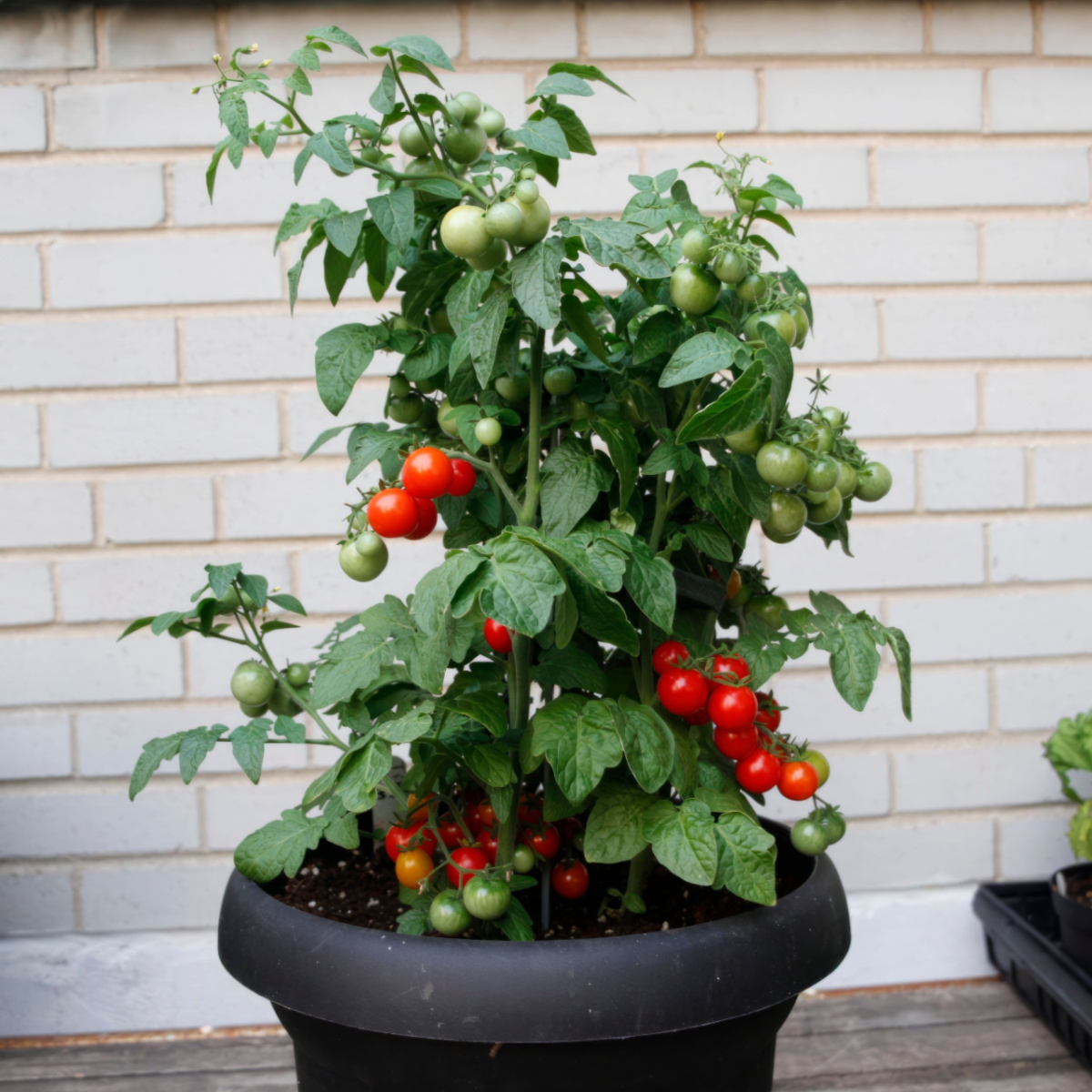
The Best Thing To Do With The Soil & Plants From Dying Fall Flower Pots!
Wondering what to do with the plants and soil from all of those dying fall flower pots and baskets?
As the last fall flowers fade and cold weather settles in, those beautiful fall pots can start looking a little rough. The mums turn brown, the annuals collapse after a frost, and containers that were overflowing with color suddenly look ready to be emptied.
But before you drag those pots to the trash, there is something inside worth saving - the potting soil! And your compost bin is the perfect place to do it!
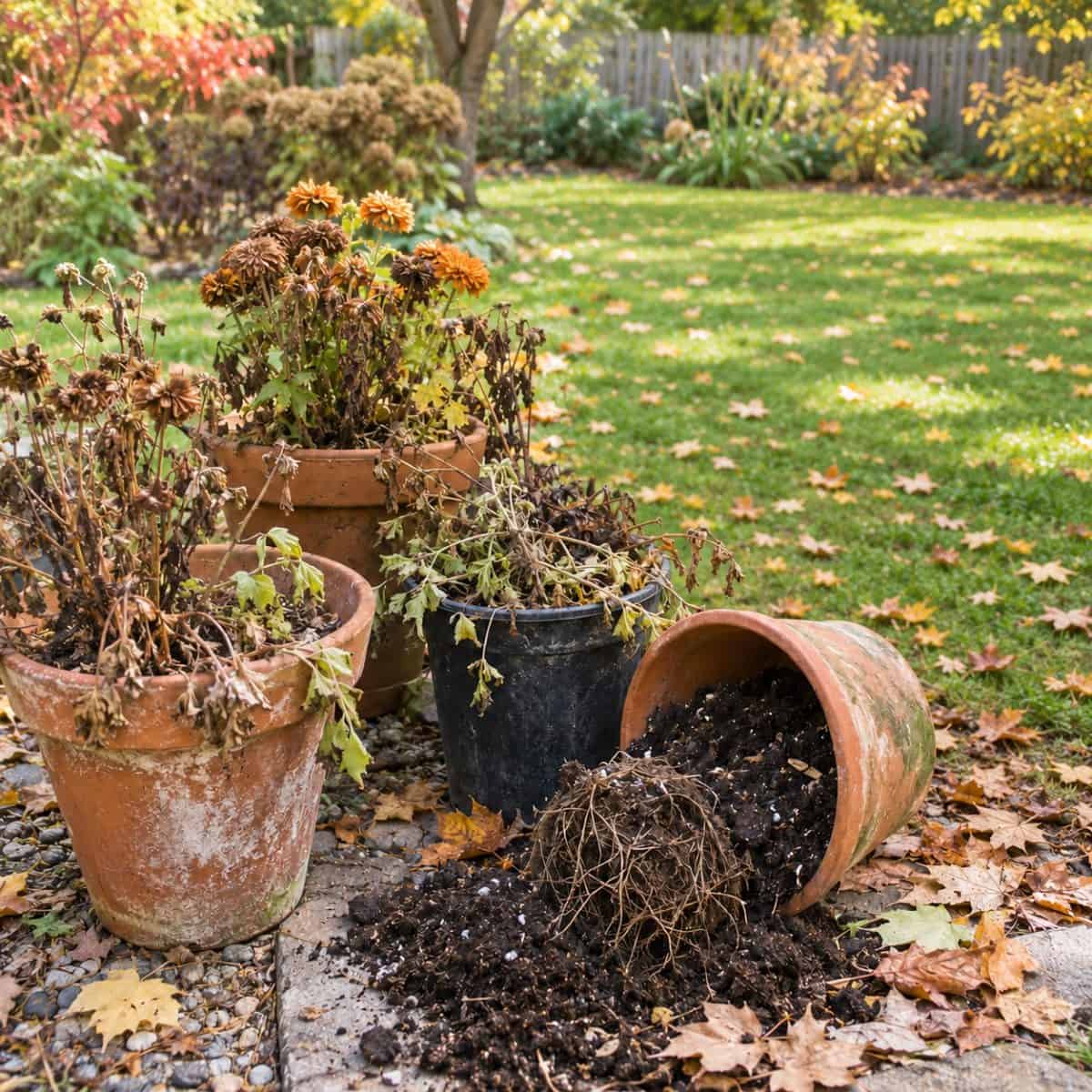
Even better, much of the plant material growing in those pots can go into the pile with it. The stems, leaves and roots all contain organic matter that can break down and become part of a useful soil amendment.
The key is removing seed heads, checking for disease and mixing everything properly. With a little preparation, your tired fall containers can help build the compost you will use in next year's garden, flowerbeds - and yes - flower pots and hanging baskets!
What To Do With The Soil & Plants From Fall Flower Pots
Why Old Potting Soil Is Worth Saving
By the end of a growing season, potting soil has been through a lot. Plants have drawn nutrients from the mix for months. Frequent watering has carried some nutrients out through the drainage holes. And the organic ingredients have gradually broken down.
That doesn’t make it worthless. Used potting mix can still contain peat moss, coconut coir, bark, perlite and other ingredients that contribute texture and help manage moisture.
Although some of those materials break down slowly or hardly at all, they can remain useful when incorporated into finished compost.
What the old mix needs is the right company. Blended with shredded leaves, fresh plant scraps and other compost ingredients, it can become part of a productive composting system.
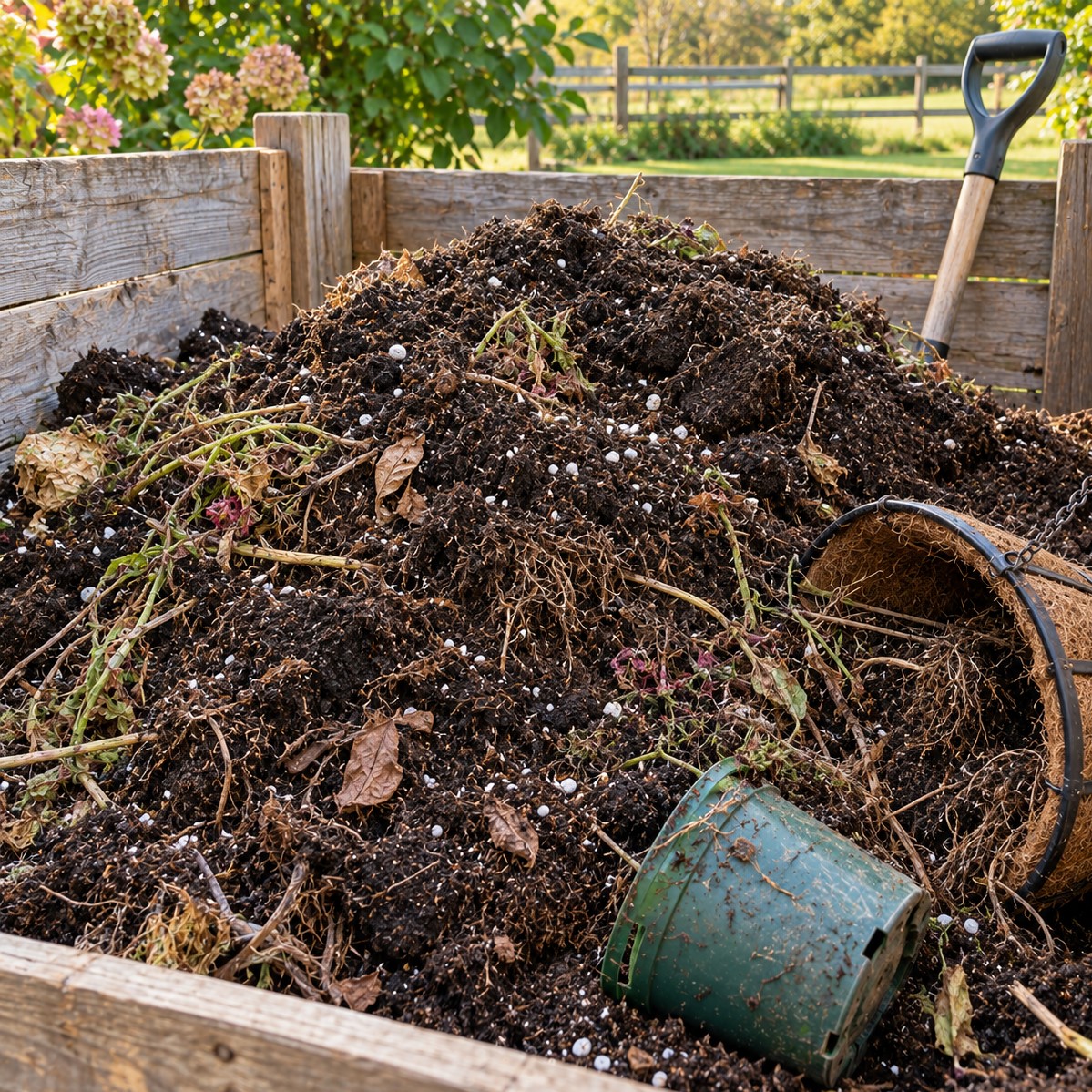
Simply dumping it into a heap by itself won’t restore all the nutrients plants removed. Potting soil is an ingredient in the process, rather than a complete compost recipe.
First Decide Which Plants You Want To Keep
Before emptying every container, take a moment to see what is growing in it. Some fall pots contain hardy perennials that you may want to save.
Ornamental grasses, asters and certain mums can potentially be overwintered, depending on the variety, your climate and how you protect them. See our article: How To Save Potted Mums For Next Year
Set aside anything you intend to overwinter. The compost pile is the destination for spent annuals and plants you have decided to discard, rather than every plant that has stopped flowering.
Once you know which containers you are emptying, move them near your composting area. Working there makes it easier to collect loose soil, chop roots and keep the cleanup manageable.
Listen To Our Garden Podcast Below

Remove Seed Heads Before Adding Plants
One of the best things you can do before composting your fall flowers is remove their seed heads.
Spent flowers may look harmless, but some hold mature seeds that can survive in a backyard compost pile. If the pile doesn’t become consistently hot throughout, those seeds may remain viable.
Spread that compost later, and you could find volunteer flowers appearing throughout your vegetable garden and flowerbeds.
There is nothing wrong with a few volunteer plants when you want them. But removing seed heads gives you more control over what comes up. Clip off dried flower heads, seedpods and any obvious seed-bearing growth before chopping the plants.
Add Healthy Stems, Leaves And Roots
Once the seed heads are removed, the remaining healthy plant material can go into your compost pile.
Leaves, soft stems and roots all contribute organic matter. There is no need to meticulously shake every bit of soil from the roots before adding them. However, size makes a big difference in how quickly those plants break down.
A whole root ball from a large fall container can remain intact for a long time. Dense roots trap the growing mix together, while thick stems resist decomposition. Pull the root ball apart with your hands or cut it into smaller pieces with a sturdy garden tool. Shake loose the potting mix as you work.

Chop stems into short sections, especially woody mum stems. Pieces a few inches long are much easier to distribute throughout a pile than an entire plant dropped on top.
Remove plastic plant tags, support stakes, decorative picks and any pieces of synthetic liner. Those materials won’t turn into compost.
Mix The Soil From Fall Flower Pots Into The Pile
The easiest mistake is emptying several large containers onto a compost pile and leaving a thick blanket of potting mix on top.
That can bury the active materials underneath and slow the process. A heavy concentration of fine, damp mix can also settle together and limit airflow. Instead, add used potting soil in modest amounts as you build or turn the pile.
Scatter it among chopped plants, shredded leaves and kitchen vegetable scraps. Break apart clumps so the ingredients are distributed rather than stacked in dense layers.
There is no exact recipe that fits every used potting mix, but the pile should remain mostly compostable organic materials. If old soil starts dominating the heap, stop adding it until you have more leaves and other ingredients to mix in.

Balance Dry Plants With Fresh Materials
Fall provides plenty of dry compost ingredients. Shredded leaves, brown flower stems and dried foliage can all help build the pile. But a heap made almost entirely from dry material will usually break down slowly.
Mix in suitable fresh materials such as vegetable peelings, coffee grounds and small amounts of fresh grass clippings when available. These help balance the dry ingredients and support decomposition.
Used potting soil won’t supply enough nitrogen to balance a large pile of dry leaves on its own. As you combine everything, check the moisture. The pile should feel about as damp as a wrung-out sponge.
Water dry ingredients lightly while mixing. If the pile is soggy or has an unpleasant smell, add dry shredded leaves and turn it to introduce air.
What Happens To The Pile Over Winter?
Composting often slows as temperatures drop. A large, active pile may continue working inside, while a smaller pile may do very little during prolonged freezing weather.
That doesn’t mean your efforts were wasted. The chopped plants and used potting mix will be ready to continue breaking down when conditions improve. Turning the pile during suitable weather can help redistribute materials and moisture.
Putting The Finished Compost To Work
Once mature, the compost can help improve garden soil, raised beds and flowerbeds. It can also become an ingredient in a fresh container mix.
But finished compost isn’t the same thing as ready-to-use potting soil. Filling a flower pot entirely with it can create drainage and moisture problems. For containers, combine mature compost with a good potting-mix rather than assuming it can replace every bagged product on its own. Here is to saving soil from all of your pots and hanging baskets this fall!
The Simple Garden Life
Follow Our Facebook Page For Even More Great Tips! Simple Garden Life Facebook Page
Simple Garden Life is a website dedicated to keeping gardening fun, simple and enjoyable! We publish two new articles each week along with a new garden podcast episode every two weeks. This article may contain affiliate links.
More Container Gardening
- How Often Should You Fertilize Hanging Baskets? - The Answer That Keeps Baskets Blooming Big!
- The Easiest Way To Grow Strawberries In Pots & Containers – And Get Tons Of Fruit!
- The 3 Biggest Secrets To Growing Tomatoes In Pots & Containers
- The Best Deer Resistant Flowering Annuals For Growing In Containers & Pots