Can You Still Plant Tulip Bulbs In November? The Surprising Answer!
Wondering if you can still plant tulip bulbs in November for early spring flower power?
The good news is that November can still be an excellent time to plant tulips! Although earlier fall planting gives bulbs more time to establish roots, missing that window does not automatically mean you have missed your chance for beautiful spring flowers.
In fact, when it comes to planting tulips late in the season, the condition of your soil matters far more than the date on the calendar. If the ground is still workable, you may have plenty of opportunity to plant.
But there are a few important things to get right. Choosing healthy bulbs, planting at the proper depth, and finding a location with good drainage can make a big difference—especially when winter weather is getting close.
Can You Still Plant Tulip Bulbs In November?
How Late Can You Plant Tulip Bulbs?
For gardeners in cold-winter climates, the practical deadline for planting tulips is when the ground freezes enough that you can no longer dig a proper planting hole.
That might happen in mid to late November in one location and well into December in another. Even within the same yard, a sheltered flowerbed may remain workable longer than an exposed bed.
Ideally, spring-flowering bulbs go into the ground several weeks before it freezes. That gives them time to begin establishing roots while the soil is cool but still workable.
But tulips can tolerate later planting. If you still have healthy bulbs and suitable soil, getting them planted is generally a better option than leaving them in a bag until spring.
Late planting does come with some uncertainty. Bulbs that have little time to root before winter may not perform quite as well during their first spring. But planting late does not automatically mean they will fail to bloom.

A Frost Does Not Mean It’s Too Late
One of the biggest sources of confusion is the difference between a frost and frozen ground.
A frosty morning can leave your lawn white and finish off tender annual flowers while the soil beneath remains easy to dig. Even several nights below freezing do not necessarily freeze the ground to planting depth.
To check, push a shovel or garden trowel into the area where you want to plant. If you can dig down to the required depth and the soil breaks apart reasonably well, planting may still be possible.
A thin crust of frozen soil on the surface is different from a bed that is frozen solid several inches down. If a mild afternoon thaws that surface layer and the soil below is workable, you may still have a planting window.
Choose A Sunny Location With Good Drainage
Tulips need a location that receives plenty of spring sunlight. A bed beneath a deciduous tree can sometimes work well because the bulbs grow and flower before the tree develops its full canopy.
But sunlight is only part of the equation. Good drainage is just as important. A low spot that collects rainwater or melting snow can leave bulbs sitting in wet soil for extended periods. That increases the risk of rot, no matter how carefully you plant.
Listen To Our Garden Podcast

Look for a location where water drains away readily. Avoid downspout outlets, soggy depressions, and areas where snowmelt regularly puddles.
If your soil is heavy clay, prepare a wider planting area rather than digging a small hole and filling it with loose material. Water can collect in an isolated pocket surrounded by dense soil.
The most important part of all? Choose healthy bulbs! Affiliate Link: 35 Mixed Tulip Bulbs – Assorted for Spring Color – Perfect for Beds, Borders & Containers
How Deep To Plant Tulip Bulbs In November
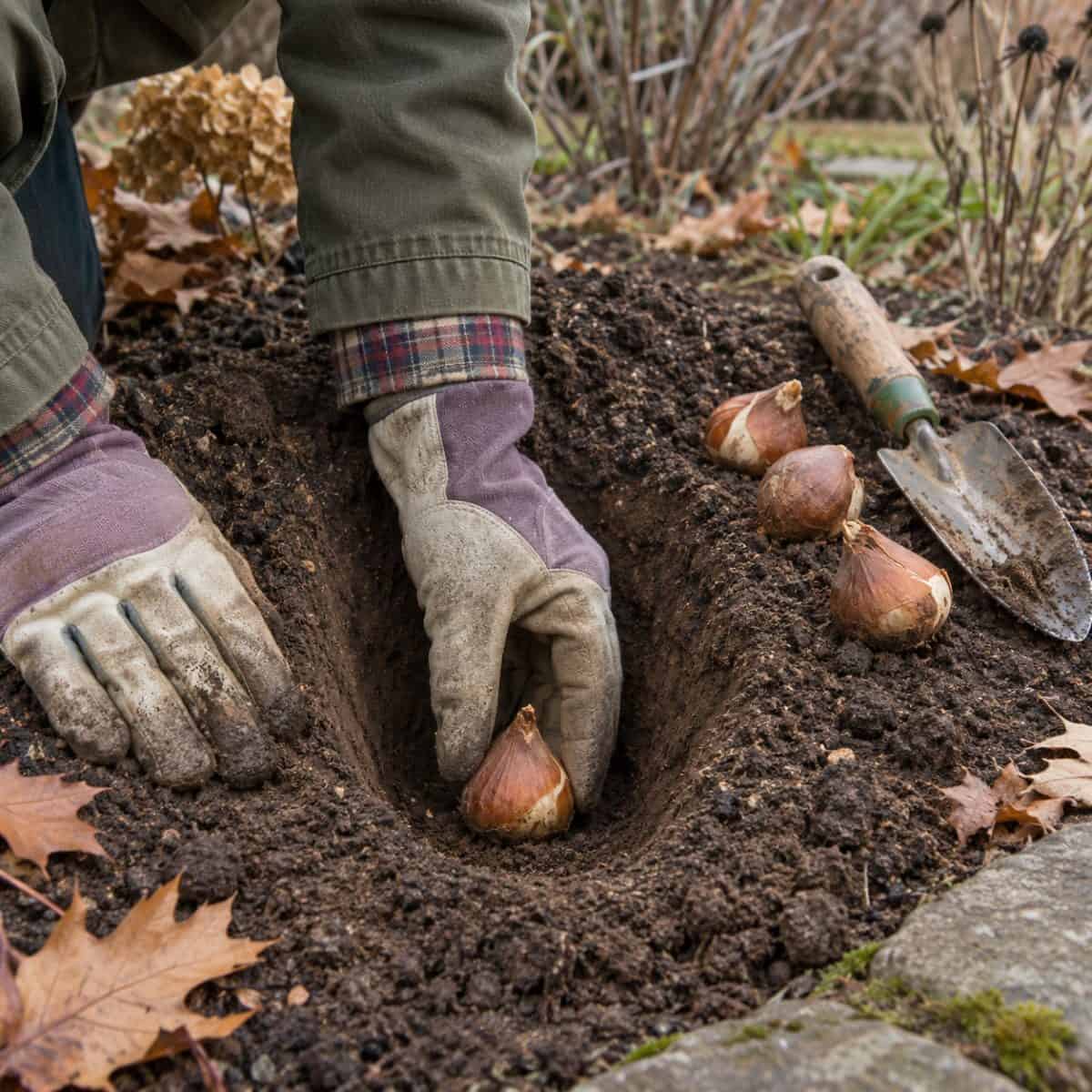
Planting late does not mean planting shallow. For many standard garden tulips, a planting depth of approximately six to eight inches is appropriate, measured from the soil surface to the bottom of the bulb.
Smaller species tulips may need a shallower depth, so follow the instructions supplied with your particular bulbs. Use the finished soil level as your reference. Mulch added afterward does not replace the soil that should cover the bulb.
Dig with a trowel, shovel, or bulb planter. For larger groups, opening one broad planting hole can be much easier than making a separate hole for every bulb.
Loosen compacted soil beneath the planting area enough to allow roots to grow, then position bulbs on a stable base at the correct depth. Avoid leaving them suspended over large air pockets.
Plant With The Pointed End Up
Tulip bulbs have a pointed top and a broader, flatter base. The roots grow from the bottom, while the shoot emerges from the top. Place each bulb with its pointed end facing upward and its flat base resting against the soil.
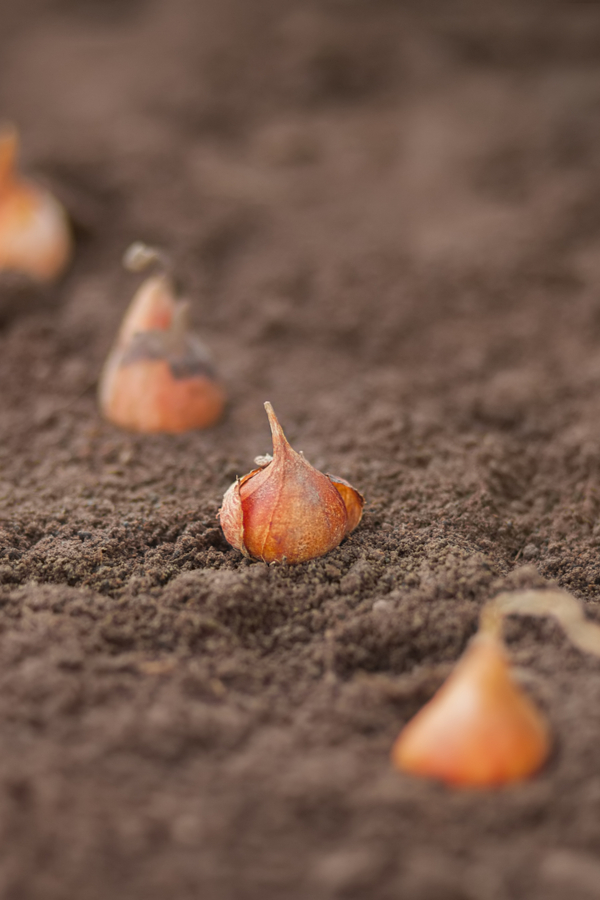
For many standard tulips, spacing bulbs about four to six inches apart works well. Check the package for recommendations, particularly if you are planting smaller varieties.
Planting in groups usually creates a fuller spring display than spacing individual bulbs far apart down a long row. A cluster of seven, nine, or more bulbs can make a beautiful pocket of color near a walkway or along the front of a flowerbed.
Once positioned, replace the soil gently and firm it lightly. There is no need to pack it down hard with your feet.
Mulch After Late Planting
A protective layer of mulch can be particularly useful when planting late.
For late-planted bulbs, mulching after planting can help slow soil cooling and give roots a little more time to establish. It also helps reduce the repeated freezing and thawing that can disturb newly planted areas.
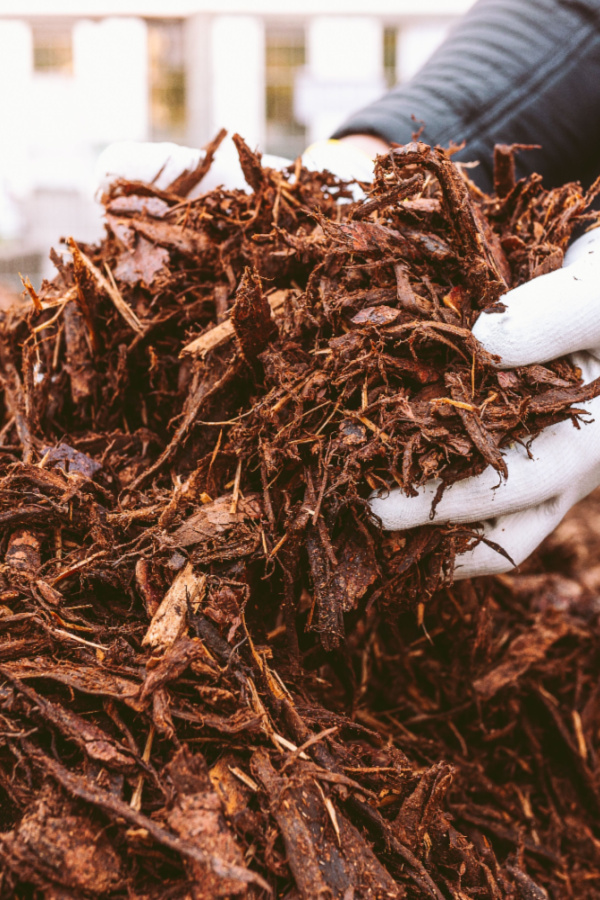
Apply about two to three inches of shredded leaves, pine needles, or another suitable loose mulch over the bed. Keep the layer airy rather than packing down wet material.
Remember that mulch is additional protection. It cannot compensate for planting bulbs too shallowly or placing them in poorly drained soil.
Mark the area as well. A small plant label can prevent you from accidentally digging into your tulips while planting something else next spring!
What To Expect Next Spring
Once your bulbs are planted, allow winter to do its work. As spring approaches, watch for shoots pushing through the soil. A little early growth during a mild spell does not necessarily mean trouble, and it is not a reason to cut the leaves off.
After flowering, remove spent blooms but leave healthy foliage in place until it yellows naturally. Those leaves help replenish the bulb for future growth.
And if you are standing in the garage this November looking at an unplanted bag of tulips, check the soil before giving up. A workable flowerbed and a little planting time may still be all you need to put those bulbs on their way to spring blooms. For more on fall planted bulbs - check out our article: The 4 Best Bulbs To Plant In The Fall - And How & When To Plant Them!
The Simple Garden Life
Follow Our Facebook Page For Even More Great Tips! Simple Garden Life Facebook Page
Simple Garden Life is a website dedicated to keeping gardening fun, simple and enjoyable! We publish two new articles each week along with a new garden podcast episode every two weeks. This article may contain affiliate links.
More Winter Gardening
- The Easiest Way To Save Coffee Grounds For Your Garden This Winter - Without Having Them Mold!
- How To Get Your Christmas Cactus Ready In November To Bloom Big!
- The Perfect Winter Bird Suet Recipe – Easy To Make & Birds Love It!
- How To Start A Garden Journal This Winter – And Why It Will Help You Garden Better!