
What you do to and for your flowerbeds before winter can make a huge difference in their success – which is exactly why it’s important to avoid some of the most common fall flowerbed mistakes gardeners often make each year!
Unfortunately, many traditional fall flowerbed chores can cause more harm than good. Cutting every perennial to the ground, applying fertilizer late in the season or covering plants with a thick layer of mulch might seem helpful – but often these tasks can actually weaken plants and make it harder for them to survive winter.
Even worse, a few common fall mistakes can allow weeds, pests and plant diseases to return with a vengeance next year. And when that happens, gardeners often spend much of the following growing season trying to correct problems that could have easily been prevented in the fall.
The good news is that preparing your flowerbeds for winter doesn’t have to be difficult or time-consuming. By avoiding the five common mistakes below, you can protect your plants, improve the soil and set the stage for healthier growth and bigger blooms next year!
How To Avoid The 5 Biggest Fall Flowerbed Mistakes
Mistake #1 – Cutting Back Every Perennial
One of the biggest fall flowerbed mistakes is cutting every perennial down to the ground as soon as its foliage begins to fade. Although some perennials benefit from fall pruning, many plants are far better off when their stems and seed heads remain standing through winter.
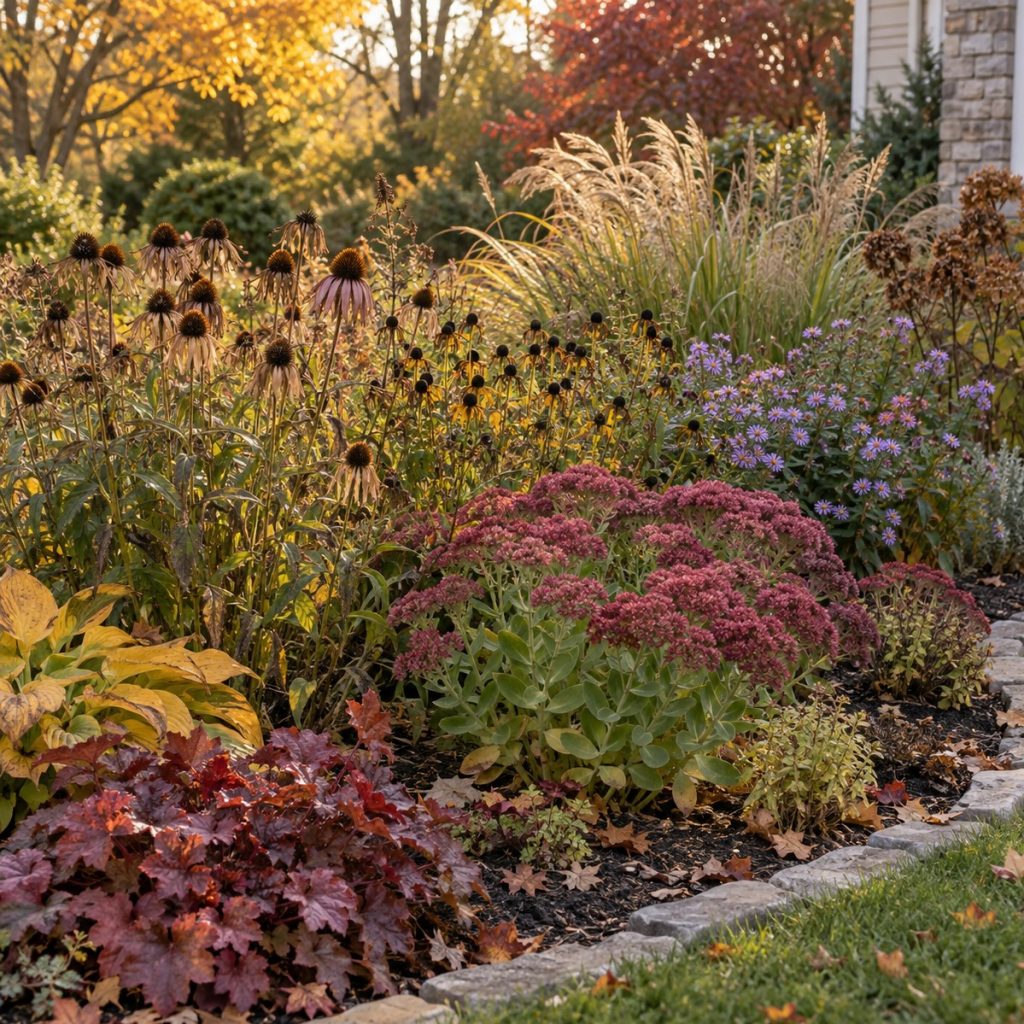
Plants such as coneflowers, black-eyed Susans, ornamental grasses and sedum provide valuable winter interest. Their seed heads also supply food for birds when other natural food sources become scarce. In addition, the standing stems help capture snow around the base of the plants, providing extra insulation for the roots.
Hollow perennial stems can also provide winter shelter for beneficial insects and native pollinators. Cutting and removing every stem in fall eliminates many of these important hiding places.
There are, however, a few perennials that are best cut back in the fall. Hostas, daylilies and peonies often turn into a soggy mess after a hard frost. Their dying foliage can become a hiding place for slugs, insects and disease. Once these plants have been killed back by frost, cut the foliage down to a few inches above the soil and remove it from the flowerbed.
The key is to cut back plants selectively rather than clearing the entire bed. Leave healthy, sturdy plants standing and remove foliage that is diseased, damaged or likely to collapse and rot over winter.
Mistake #2 – Leaving Diseased Plants & Annuals In Place
Although many healthy perennials can remain standing, diseased plants and dying annuals should never be left in flowerbeds over winter. Old plant material can provide the perfect place for harmful insects, fungi and disease spores to survive until spring.
Powdery mildew, black spot, rust and other common diseases often remain on infected leaves and stems. If this material stays in the flowerbed, rain and wind can spread the spores back onto new growth when warmer weather returns.
Start by pulling out all spent annual flowers, including their roots. Annuals such as petunias, impatiens and begonias will not survive freezing temperatures. Removing them prevents their decaying roots and foliage from harboring pests or creating mold problems.
Next, remove any diseased or insect-damaged foliage from perennials and shrubs. Do not place obviously diseased material in a home compost pile. Most backyard compost piles do not become hot enough to destroy every disease spore or insect egg. Instead, dispose of the material according to your local guidelines.
#3 Fertilizing Plants Late In The Fall – One Of The Biggest Flowerbed Mistakes Of All!
Fertilizing flowerbeds late in the growing season is another common mistake. Gardeners often assume that giving plants one final feeding will help them survive winter. Unfortunately, late fertilizing can do exactly the opposite.
Most fertilizers encourage plants to produce new growth. When applied in late summer or fall, they can cause perennials and shrubs to send out tender new leaves and stems. This growth does not have enough time to harden off before freezing temperatures arrive.


When a frost hits, the tender growth is easily damaged. Even worse, the plant has wasted valuable energy producing new stems instead of storing resources in its roots for winter.
Stop fertilizing most flowering perennials six to eight weeks before your average first frost. This gives the plants time to slow their growth and prepare for dormancy naturally. Avoid using high-nitrogen fertilizers in particular, since nitrogen promotes excessive leaf and stem growth.
Mistake #4 – Pruning Spring-Flowering Shrubs
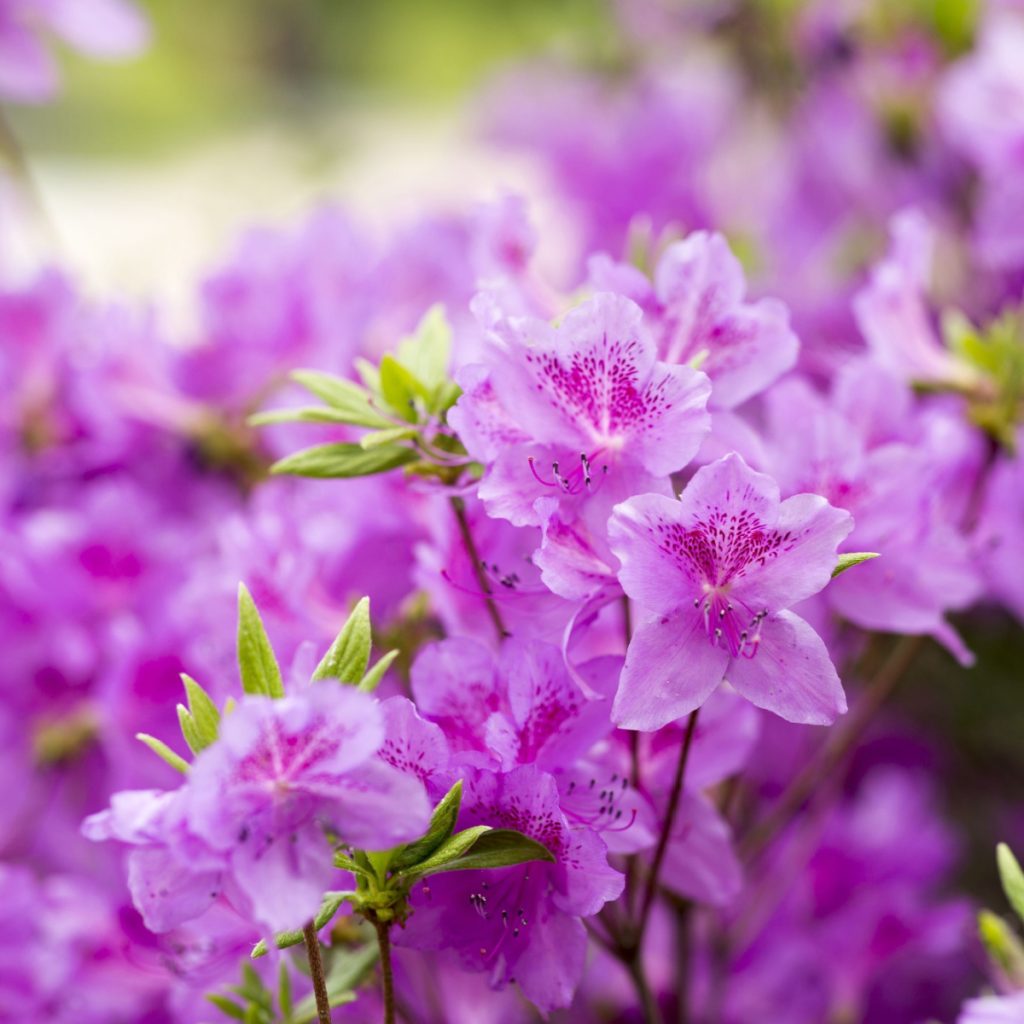
Fall might seem like the perfect time to shape overgrown shrubs, but pruning spring-flowering varieties now can remove next year’s blooms. Many popular flowering shrubs develop their flower buds on old wood during the summer and fall.
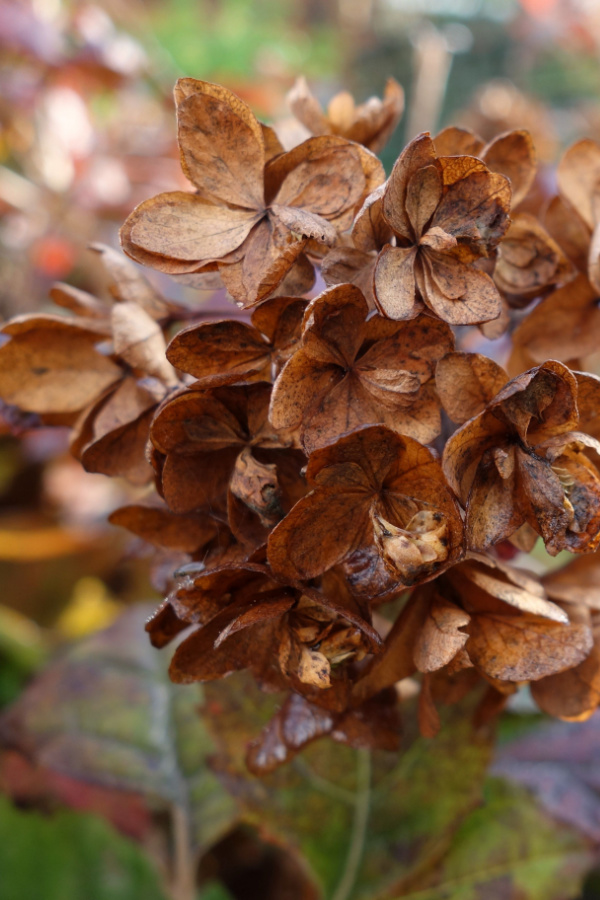
Lilacs, azaleas, rhododendrons, forsythia and many varieties of hydrangeas already have next year’s flower buds in place by autumn. Pruning these shrubs in the fall will cut away the buds before they ever have the opportunity to bloom. See our article: What To Do With Old Hydrangea Blooms This Fall – And Why It Matters!
For spring-flowering shrubs, the best time to prune is usually immediately after they finish flowering. This gives them the rest of the growing season to produce new branches and set buds for the following year. In fall, limit pruning to dead, broken or diseased branches. These can be safely removed at any time because they no longer contribute to the plant’s health or future blooms. Save all major shaping and size reduction for the proper pruning window.
Mistake #5 – Not Mulching
Whatever you do – don’t forget to mulch this fall! Without protection, freezing temperatures, winter winds and repeated cycles of freezing and thawing can take a heavy toll on plants and soil.
A thick layer of mulch acts like an insulating blanket. It helps regulate soil temperature and protects perennial roots from sudden temperature swings. This is especially important for newly planted perennials and shallow-rooted plants that have not yet established a strong root system.
Apply a four- to six-inch layer of shredded leaves, wood chips, pine needles or a combination of compost and mulch over the bed. Mulch is also one of the best defenses against future weeds. Bare soil gives blowing weed seeds an open place to land and germinate. A four- to six-inch layer blocks sunlight from reaching existing weed seeds in the soil, while making it difficult for new seeds to reach the soil and take root. That can mean far fewer weeds to pull next spring and summer.
Keep mulch a few inches away from the crowns and stems of perennials and from the trunks of shrubs. Piling it directly against plants can trap excess moisture and lead to rot.
A Few Simple Fall Tasks For Better Flowerbeds
Once the biggest mistakes are avoided, there are a few simple tasks that can make an enormous difference next year. Begin by removing weeds before they have a chance to drop seeds. One weed left standing in fall can create hundreds of new weeds the following spring.
Continue watering newly planted perennials, shrubs and bulbs whenever fall weather is dry. Their roots continue growing even after the top of the plant begins to go dormant. Plants that enter winter with adequate moisture are far better prepared to handle freezing temperatures and drying winter winds.
Fall is also an excellent time to add compost, plant spring-flowering bulbs and divide overgrown perennials. Cooler temperatures reduce stress on plants, while warm fall soil encourages strong root development.
Simple Garden Life
Follow Our Facebook Page For Even More Great Tips! Simple Garden Life Facebook Page
Simple Garden Life is a website dedicated to keeping gardening fun, simple and enjoyable! We publish two new articles each week along with a new garden podcast episode every two weeks. This article may contain affiliate links.