
Do you think your tomato plants might have blight? The good news is that if you act quickly, you can often slow its spread, protect your harvest, and help prevent it from returning next year!
Tomato blight is one of the most common diseases gardeners face. Left unchecked, it can quickly damage your current crop and linger behind to threaten future tomato plants too.
The biggest problem with blight is how fast it spreads. Once one plant becomes infected, it can quickly move through your tomatoes and even spread to peppers, potatoes, and eggplant if you don’t take action right away.
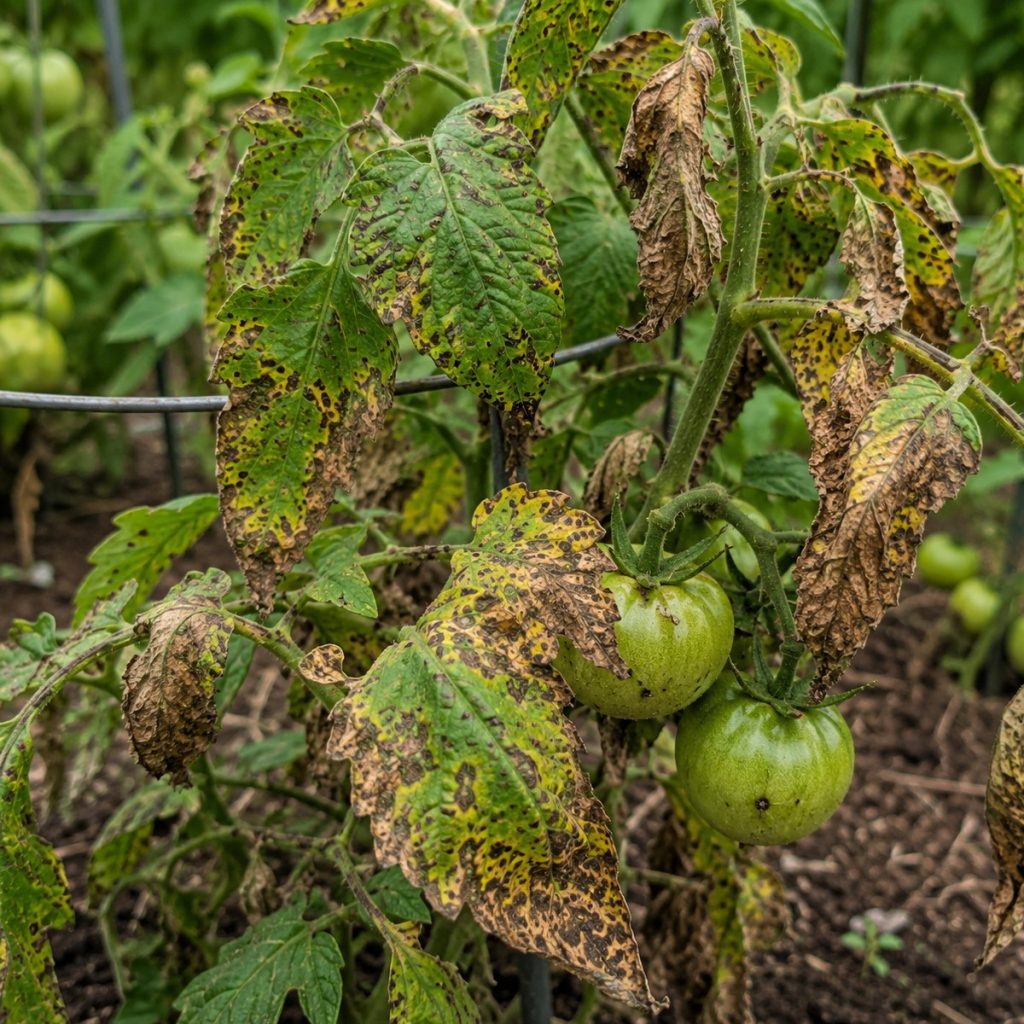
What To Do If Your Tomato Plants Get Blight
What Is Blight?
So what is blight and what causes it? Tomato blight is actually a common fungal disease that is spread by spores that live in the soil. These spores can be brought to your garden by the wind, animals, insects – and even human foot traffic.
Once the spores land on the soil, they can live there for up to five years before they finally die. That unfortunately means that any tomato plants you grow in the same soil thereafter can be affected by the spores as well.
The Two Types Of Tomato Blight
The first step of dealing with blight is to know which type of blight your plants are suffering from. There are two main types of blight that affect tomatoes: Early season blight and late season blight.
Early season blight occurs right as fruit starts to form on plants. While this type of blight isn’t usually fatal, it will still cause big issues if left untreated. The most important of which is a huge reduction in harvestable fruit.
Early season blight does not affect the fruit. However, it will quickly destroy the foliage growing on each plant. Tomato plants rely on this foliage to absorb energy from the sun. Without a thick canopy, there simply isn’t enough energy to mature growing fruit.
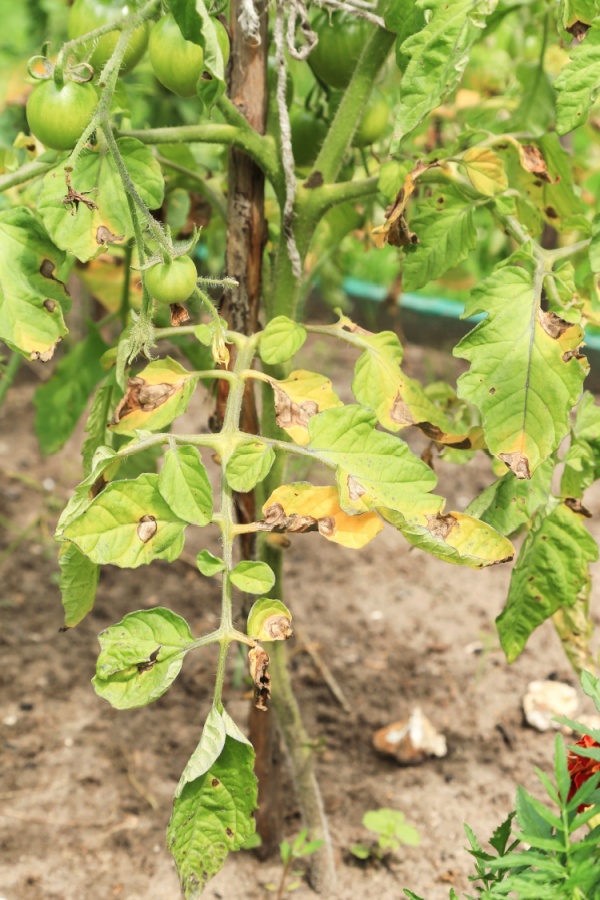
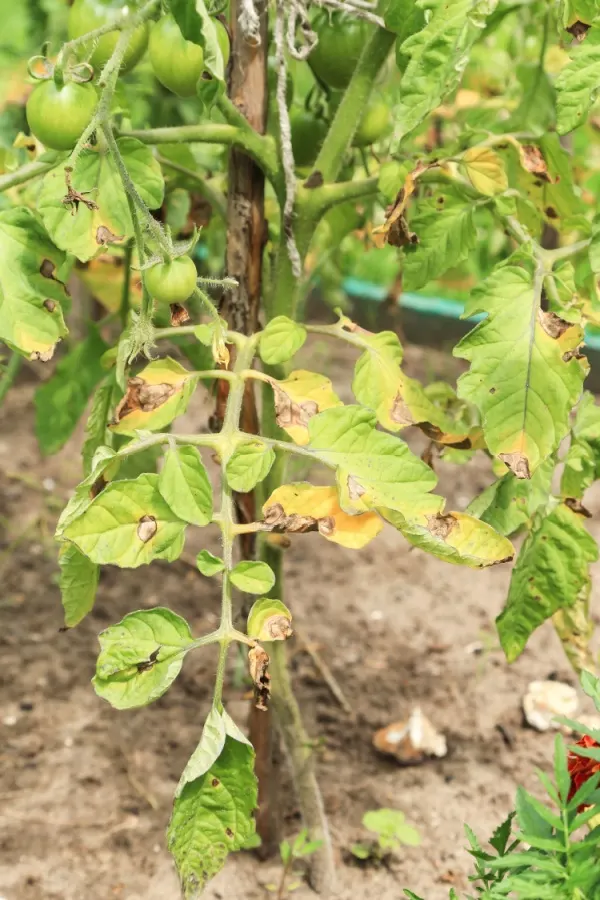
Late season blight, on the other hand, is almost always fatal for plants. When late season blight strikes, it’s just a matter of time before the tell-tale spots on leaves turn into the entire plant going black and dying – stems, leaves, and fruit combined.
Even though you can’t stop late season blight once it has started, there are still ways to slow down its progression. One thing is for sure, whether you have early or late season blight, you need to act fast.
Recognizing The Early Signs Of Tomato Blight
So how do you know if your plants are starting to suffer from blight? Early blight will usually start out on the lower leaves and work its way up the plant. Damage will first appear as round, brown or even yellowish-brown spots that are circular.
As it progresses, the leaves will begin to brown off, shrivel and die. Usually, even though the leaves are dead, they will still stick to the stems and the plant. Again, the plant won’t die completely, but it will be all but useless as a producer.
Late season blight can appear anywhere on the plant and starts as brown spots surrounded by a grey or a very light green border around the spots. These blemishes can also appear to have a film or a greasy sheen to them as well. It will eventually spread to all leaves and the fruit.
No matter if your tomato plants get early or late season blight, early detection and action is the key. Unfortunately, if you simply allow blight to spread all over the plant, it will quickly spread to other plants in your garden – and ruin your soil for future crops for many years to come.
Check Out Our Latest Podcast Below!


Getting Rid Of Bad Foliage & Fruit
For plants that are showing signs of blight, the first step is to remove the affected plant tissue as soon as possible. The diseased foliage cannot be salvaged anyway and will eventually die, so it’s best to remove it immediately.
Even though blight can’t be completely stopped, you can still stay on top of the spread by fast pruning. Removing the dying foliage helps to slow it way down. It can even keep your plants producing until the end of the growing season or near it.
The key is to remove the foliage carefully, without spreading the blight spores further. Use a pair of sharp, clean shears to cut off the damaged stems and fruit at the first signs of blight. Wipe the blades off between each plant to avoid cross contamination.
If the plant is too far gone, remove it completely and quickly for the sake of your other plants. Wrap the plant tissue in newspapers or place it in a bag. This will help to stop the spread of the spores from doing more damage.
Properly Dispose Of The Materials
Do not add the foliage to your home compost pile. Most home compost piles can’t heat up enough to kill off the blight spores. When you go to use the finished compost, you will simply be reintroducing the spores back into your garden or raised beds.
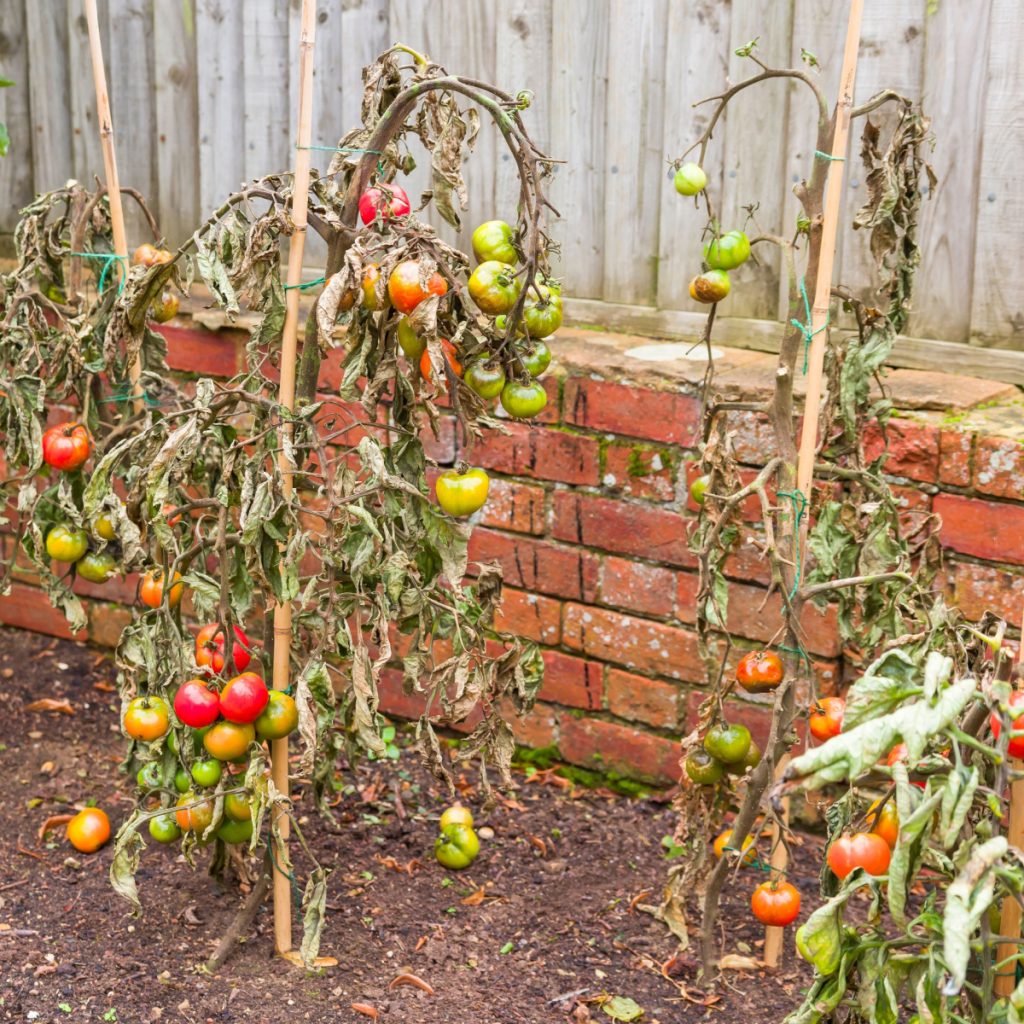
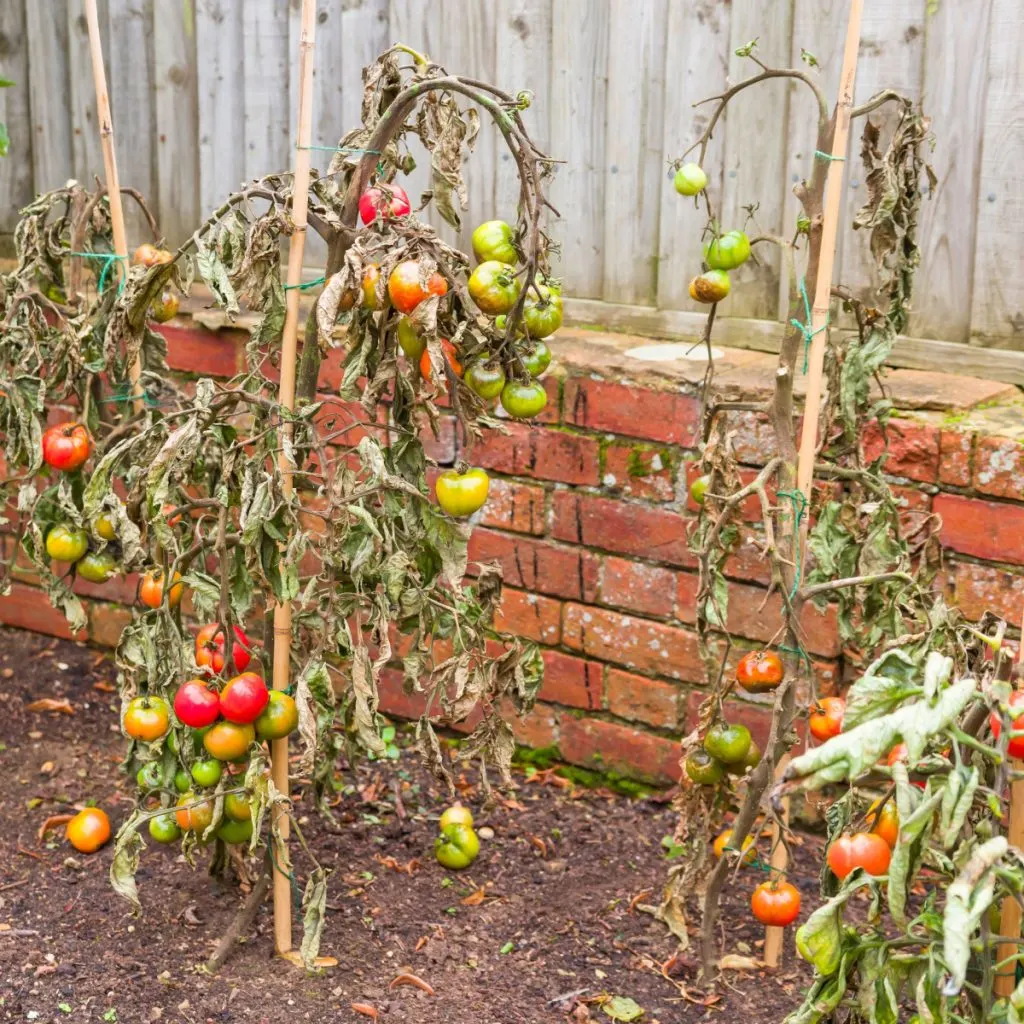
Instead, dispose of the plant tissue far away from the spaces where you grow vegetables. Some communities have local commercial compost piles that heat up high enough to kill spores. Otherwise, toss it in your trash or take it far away from your garden and bury it deep in the soil.
Even healthy tomato plants are not ideal for composting. Why? Because they can carry so much undetected disease so it is always best to leave them out. See our article: 5 Plants To Never Compost From Your Flowerbeds & Garden
At the end of the season, it’s then important to know the exact space where you grew your tomatoes affected by blight – because the one thing you want to make sure more than anything else to do next year is plant your tomatoes in another section of your garden!
How To Prevent Blight Next Year
Although crop rotation is too late to help the current year’s garden, it will make a huge difference in how future tomato plants fare.
Crop rotation is the simple practice of not growing the same crop in the same location each year. Instead, you move the plants around to a different spot.
Using crop rotation helps to limit the number of soil-borne diseases as well as plant-specific pests that can bother crops. Not only is it important for tomato plants that grow in traditional gardens, it also applies to those crops grown in raised beds as well as containers.
If your plants are showing signs of blight this year, be sure to move your tomato plants far from the same space next year. Also, avoid planting other crops that blight can affect as well. For containers and raised beds, it’s best to completely remove the soil and refresh it each year.
One thing is for sure, if you tomato plants get the blight, it really is vital to take fast action to slow the process down and stop it from ruining future crops – and your garden soil as well!
The Simple Garden Life
Follow Our Facebook Page For Even More Great Tips! Simple Garden Life Facebook Page
Simple Garden Life is a website dedicated to keeping gardening fun, simple and enjoyable! We publish two new articles each week along with a new garden podcast episode every two weeks. This article may contain affiliate links.