The Best Perennials To Divide This Fall To Fill Your Flowerbeds For Free!
Did you know that fall is one of the best times to divide your perennials - not only to get more plants for free, but to help your existing plants grow healthier, stronger and bloom better next year?
After a full season of growing, many perennials can become crowded and overgrown. By late summer and early fall, plants that once looked full and vibrant may begin to look tired, thin or simply too large for their space. That makes autumn the perfect time to dig them up, divide them and create several new plants from just one!
Even better, dividing can give older perennials a much-needed boost. When plants remain in the same spot for too many years, their roots can become thick and overcrowded, making it harder to absorb water and nutrients. That can lead to weaker growth and fewer blooms. Dividing them in the fall gives the roots more room to grow - setting the stage for healthier plants and bigger blooms next year!

The Best Perennials To Divide In Fall
Benefits Of Dividing In The Fall
One of the biggest reasons for waiting until the fall before dividing perennials is that you are able to see exactly what you have to work with.
After summer is over, the plants have grown and filled out as much as possible. This allows you to see your flowerbeds and garden spaces and easily identify which plants can benefit from being divided or not.
There is no guesswork on where the plant’s growth will be like there would be during the early springtime. It’s right there for you to see! In addition, you can also identify which plants struggled to set blooms – which is another big sign that it’s time for dividing.
Another advantage to planting in the fall is that new transplants have plenty of time to establish before winter hits. Then, once spring arrives, the plants are ready to start to push out new growth right from the start.
Most perennials can benefit from being divided every 3 to 5 years, but this varies depending on the perennial as well as their growing location.
When Your Divide Perennials In The Fall...
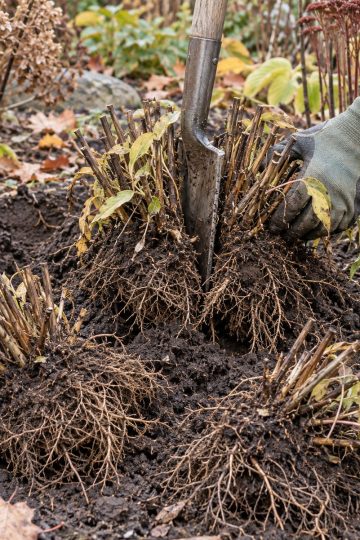
Before dividing, wait until you’ve had a few days without rain so the soil is easier to work with. This will prevent you from needing to dig through muddy and clumpy roots. A great tool to have on hand for dividing is a garden knife – they make slicing through perennial roots a breeze. Affiliate Link: Hori Hori Garden Knife
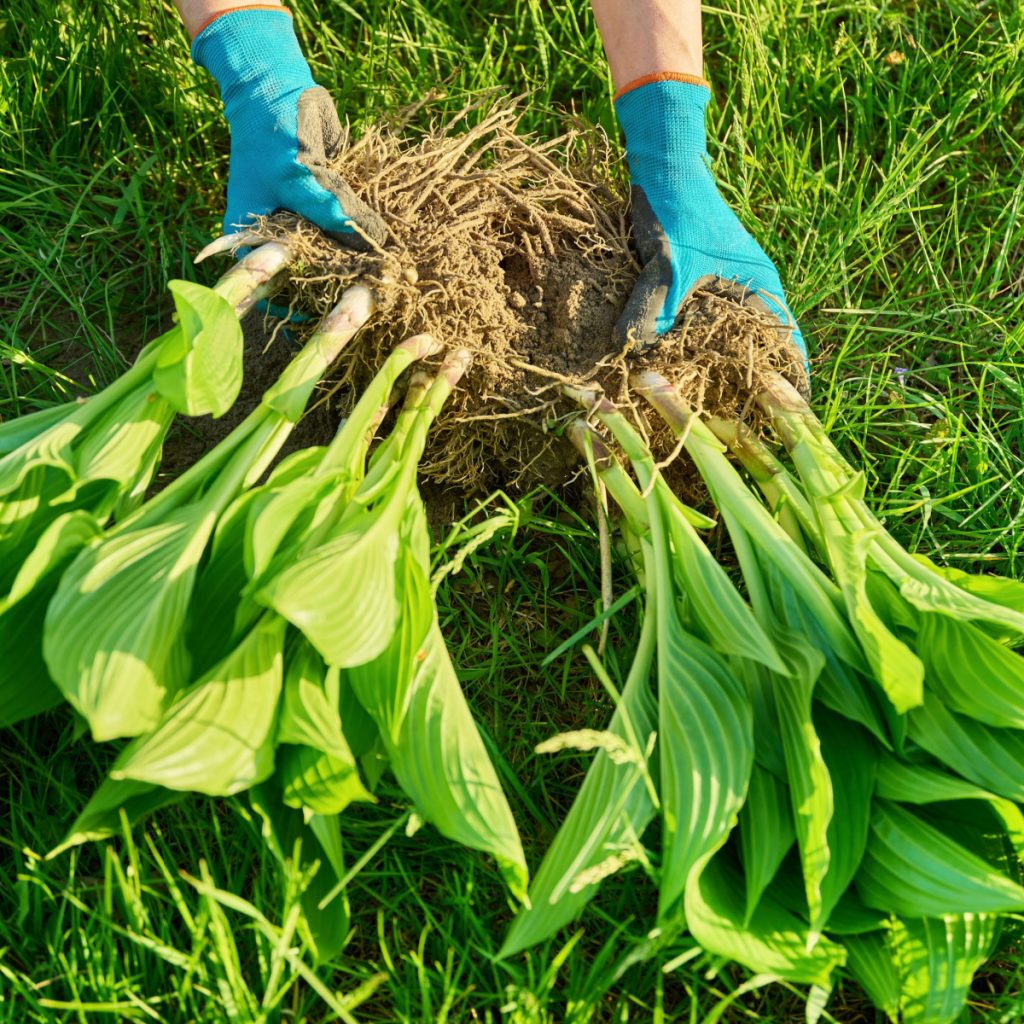
Avoid dividing too late in the fall since this can put the transplants at risk of freezing out with cold winter temperatures. About four to six weeks before your first frost date is the ideal time for most locations.
Now that you know why fall is the best time for dividing, let’s take a look at five of the best perennials of all for dividing late in the season!
Daylilies
Daylilies are one of the best perennials for providing stunning blooms from early spring until early fall. They are extremely low-maintenance, drought-resistant, and are also left alone by most pests and animals.
Even though they are simple to care for, daylilies can benefit from being divided every three to five years. This is because larger, older daylilies tend to struggle to produce healthy foliage as well as produce new blooms.
You can divide plants as you start to see their foliage die back. It helps to cut the plants back to about 2 inches above the soil line before dividing. This allows you to see the roots more easily. It also removes any place for pests and bugs to hide and overwinter.
Listen To Our Latest Podcast!

Hostas
Another popular landscaping perennial is hostas. Unlike most flowering perennials, hostas are grown for their large foliage in various shades of green as opposed to their blooms.
Where other perennials might struggle to grow in the shade, hostas thrive in it. In addition, any new transplants you create after dividing are perfect for transplanting into pots and containers.
You can divide perennials like hostas every three to five year - and fall is a great time to do it! This is especially the case for larger varieties that can quickly take over their growing space in just a year or two. Like daylilies, cut back the foliage to just a few inches above the soil prior to dividing.
Phlox
Phlox fills your landscape with a blanket of color from late spring until the end of summer. While cutting phlox back can help keep it healthier over winter, sometimes a little more action is required.
Phlox can benefit from dividing every two to four years. If you start to notice that your plants are slowing down their production of blooms, it might be a good time for dividing. Aim for dividing phlox about four to six weeks before your first expected frost.
Split phlox roots into equal sections with at least three or more shoots and healthy roots. Plant cuttings immediately, watering well to help set plants in the soil.

Coneflower
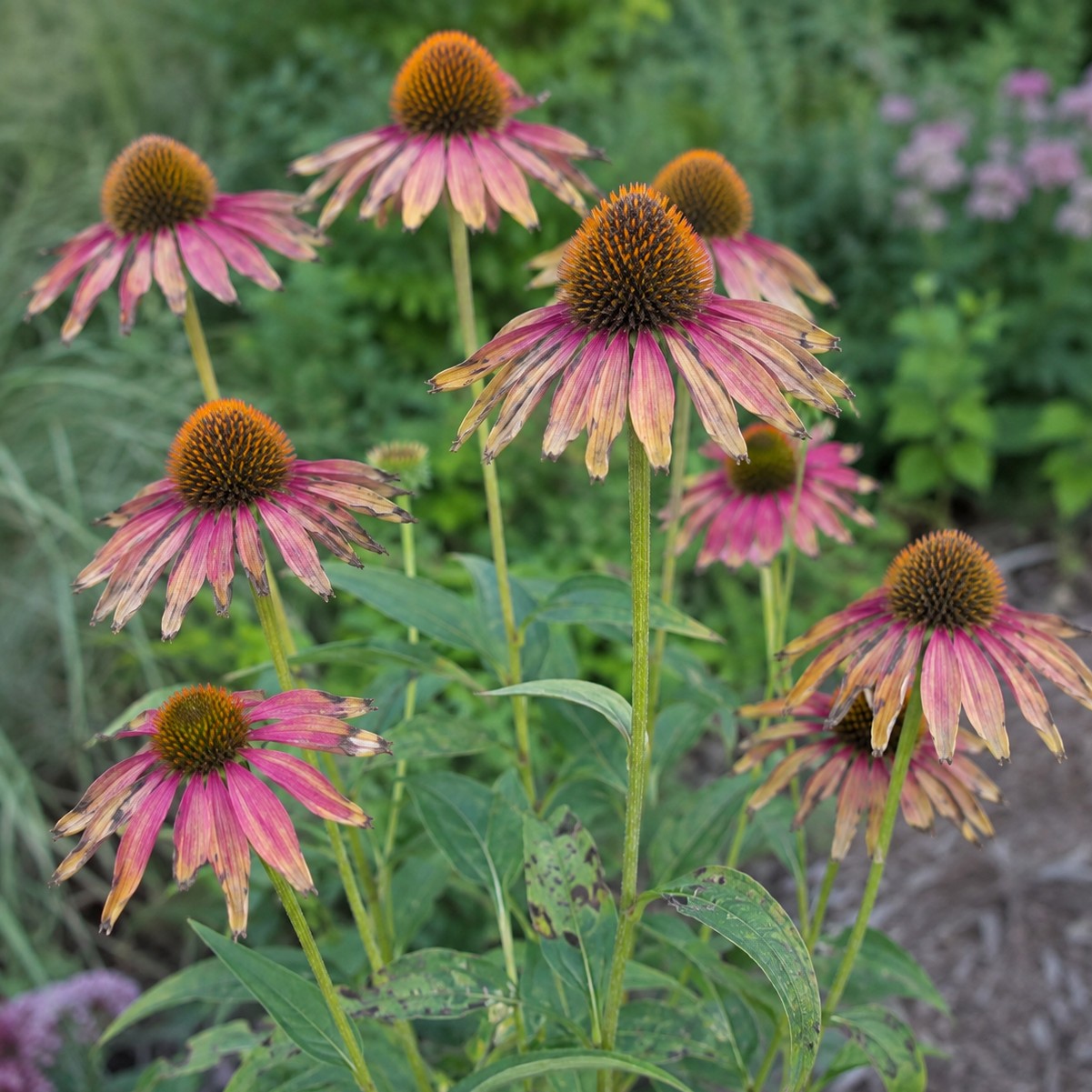
Coneflowers are both drought and pest-resistant while at the same time drawing in loads of pollinators. Their daisy-like blooms shine bright through the mid to late summer heat when other flowers might struggle to set blooms.
However, after a few years, the flowers in the middle of the plant start to look less than ideal. In addition, overgrown coneflowers can cause plants to become weak and more susceptible to insect damage and diseases. See: What To Do With Coneflower After It Stops Blooming – How To Keep Coneflower Healthy!
If your plants are struggling to set blooms or are starting to get overgrown, then it’s time for dividing. To ensure that the coneflower plants stay healthy, divide them every three to four years. Just wait until the blooms die back so you can safely and easily divide them.
Black-Eyed Susan
These cheerful perennials are perfect for growing and thriving in almost all types of soil conditions and climates. At the same time, they are also deer-resistant and drought-tolerant.
If that wasn’t enough, black-eyed Susan also has a longer blooming period than most flowering perennials. However, since these flowers are self-seeders, the plants can quickly start to crowd each other out. When this happens, not only will plants struggle to set blooms, but the blooming period will be less as well thanks to fewer nutrients and resources in the soil.
To prevent this from happening, divide your established black-eyed Susan every three to five years. Wait until the plants stop blooming and start showing signs of dying back before dividing. Just don’t wait too long into fall so transplants have time to become established before winter arrives.
Here is to taking the time to divide some of your perennials this fall - and to more plants than ever next spring!
Simple Garden Life
Follow Our Facebook Page For Even More Great Tips! Simple Garden Life Facebook Page
Simple Garden Life is a website dedicated to keeping gardening fun, simple and enjoyable! We publish two new articles each week along with a new garden podcast episode every two weeks. This article may contain affiliate links.
More Perennial Flowers
- The 3 Best Things You Can Do For Your Hydrangeas In October - And What You Shouldn't!
- 5 Perennial Flowers You Can Still Divide In October – Fill Your Flowerbeds Now For Next Year!
- Coneflowers Done Blooming This Summer? Here's What You Should Be Doing Next!
- How To Get Lavender To Bloom Again - The Best Way To Prune Lavender After It Blooms!