How To Mulch Garlic In The Winter – How Much Mulch To Use & Why It Matters!
If you plant garlic in the fall - one of the most important things you need to do for it through the winter months is mulch it. But the real key to success with mulch and garlic is just how much do you need to put down - and when should it go on?
Even though garlic is one of the most cold-tolerant crops you can grow, it still needs one big thing to survive winter in great shape - protection. Garlic may be hardy, but it is far from carefree. The cloves are planted shallow, and the soil they grow in is often exposed to wide temperature swings through the winter.
When cold snaps turn to sudden warm spells and then right back to freezing weather, garlic can struggle. Inconsistent soil temperatures can weaken roots, injure young shoots, or even heave the bulbs completely out of the ground. Which is exactly why putting enough mulch on top of your garlic bed is so important!

Mulch helps garlic settle in for the winter by insulating the soil. It keeps the ground from warming too fast, freezing too deep, or shifting around from frost action. When your garlic is tucked under a good layer of mulch, it stays protected and stable until spring arrives. And that protection is the difference between a healthy garlic harvest and a disappointing one.
So how much mulch do you actually need? And why is the right amount so important? It all starts with understanding what garlic does below the surface in winter.
Why Garlic Needs Winter Mulch To Thrive
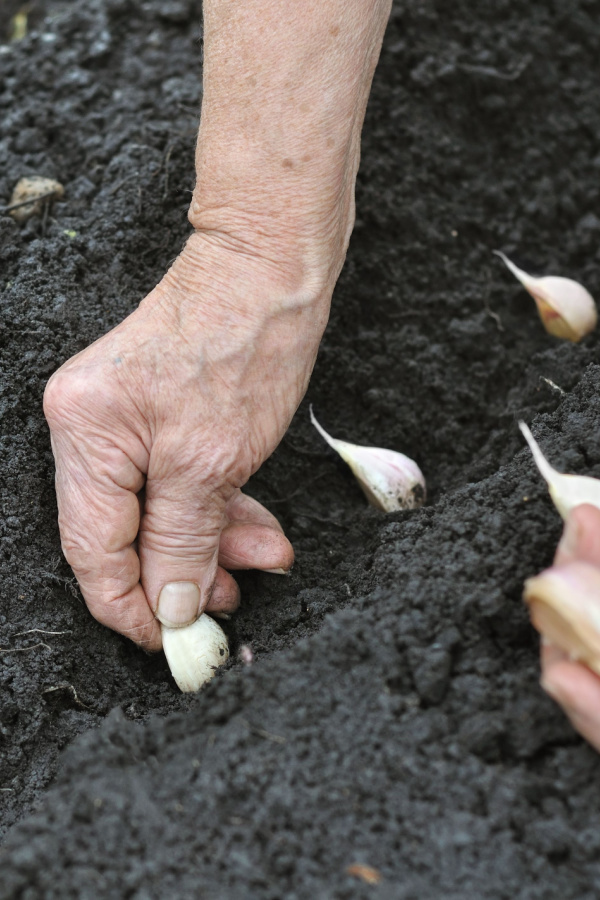
When garlic is planted in the fall, the goal is for the clove to grow strong roots before the soil freezes. Those roots anchor the bulb and help it pull in moisture and nutrients all winter long. The top growth, however, should stay small. See: When & How To Plant Garlic In The Fall – And Why It’s The Best Time To Plant!
You want the plant to focus on root development, not leaf production. Too much green growth before the cold arrives can lead to frost-damaged shoots.
Winter mulch helps with both goals. It keeps the soil temperature steady enough for root growth while slowing down the top of the plant so that the leaves don’t stretch too far at the wrong time. Garlic works best when the soil stays consistently cool, and mulch helps keep that balance.
Without mulch, the soil can freeze deeply during cold spells, killing tender roots. When the soil thaws rapidly during warm spells, the garlic may send up premature shoots. And when the freezing returns, those tender shoots can be damaged.
Keeping Garlic Bulbs Stable Through Winter
Mulch creates a buffer that evens out these extremes, keeping the plant more stable during the ups and downs of winter. Mulch also helps prevent frost heaving. When soil freezes and thaws repeatedly, it can push shallow bulbs upward.
A good mulch layer stops that from happening by holding the soil in place. This is important because garlic is planted only about one to two inches deep. With no protection, even a few freeze-and-thaw cycles can lift a bulb high enough to expose it to bitter cold or drying winds. Once that happens, the clove may never recover.
Mulch also keeps weeds down. Although winter weeds are slow to grow, they still compete for nutrients and moisture. A thick layer of mulch smothers them so the garlic can grow without competition once spring arrives.

How Much Mulch Garlic Really Needs
For garlic to get full winter protection, you need to apply a layer of mulch that is deep enough to insulate but not so heavy that it smothers new growth in spring. The ideal amount is usually between four and six inches.
This depth gives the garlic everything it needs for winter protection while still allowing sprouts to break through when spring arrives.
Four inches is the minimum amount that will hold in soil warmth and prevent frost heaving. Anything less than that can still allow the soil to freeze too deeply during sharp cold spells. Six inches provides even better insulation, especially in areas with harsh winters, strong winds, or little snowfall.
If you live in a milder climate where winters are cold but not extreme, four inches will be enough. In northern climates or in spots where the wind sweeps across beds and exposes soil, six inches is a more reliable thickness. Adding mulch up the edges of raised beds is also helpful because raised soil tends to freeze faster than ground-level beds.
The key is to apply enough mulch to create a soft blanket over the garlic that stays in place all winter long. A light dusting simply won’t do the job. Garlic beds need a real cover to stay protected.

The Best Mulch Materials To Use
Although you can use many different types of mulch, some materials work far better for garlic than others. The best choices are lightweight, loose materials that insulate well without compacting.
Straw is the classic mulch used by most garlic growers. It is light, airy, and easy to spread. It traps warm air pockets that insulate the soil, and it doesn’t mat down too tightly over winter. Leaves also make an excellent mulch, especially shredded leaves. They settle around the garlic nicely and break down in spring to feed the soil.
Grass clippings can work, but only if they are dry and applied lightly at first so they don’t form a dense layer. Sawdust, wood chips, and bark mulch are not good choices for winter garlic mulch. They are too dense, too heavy, and take too long to break down. They can also rob nitrogen from the soil as they decompose, which garlic needs in early spring.
Compost alone is not a good winter mulch for garlic. It provides nutrients, but it does not insulate well enough on its own. However, compost can be applied under your mulch layer for a nutrient boost, with straw or leaves on top for protection.
When To Apply Mulch To Garlic
Timing matters just as much as the depth of the mulch. You never want to mulch garlic too early. If you cover the bed while the soil is still warm, you may trap heat and encourage too much top growth. That can lead to frost-damaged shoots once cold weather arrives.
The best time to mulch garlic is after the soil has cooled but before it freezes. In many regions, this is usually two to four weeks after planting. The cloves will have had time to root, and the soil will be cool enough that the garlic won’t put on too much leaf growth.

A good rule of thumb is to wait until night time temperatures are consistently in the low 30s or upper 20s. This signals that the soil is heading into winter dormancy. Once you see this trend, it is time to mulch.
If the weather turns extremely cold shortly after planting and the soil begins freezing faster than expected, go ahead and mulch sooner. It is better to protect the garlic early than risk root damage from a quick freeze.
How Mulch Helps Garlic In Early Spring
The benefits of mulch don’t stop once winter ends. Mulch plays a huge role in helping garlic wake up and grow strong in spring. As the temperatures warm, the mulch protects the young shoots from sudden cold snaps. It keeps the soil from drying out as spring rains come and go, and it slows down weed seeds that try to germinate once the soil warms.
As garlic sprouts begin to push through the mulch, the loose material allows them to emerge easily. That is why using fluffy mulch like straw or shredded leaves is so important. If you use a mulch that is too heavy, the young shoots may struggle to break through.
In early spring, you can pull the mulch back slightly to help the soil warm faster if needed, but always leave some mulch around the base of the plants. Garlic grows best with cool roots and weed-free soil. A light covering of mulch in spring helps accomplish both.
Here is to giving your garlic the right amount of mulch to help protect it this winter - and to a harvest of big, flavorful bulbs next year!
Simple Garden Life
Follow Our Facebook Page For Even More Great Tips! Simple Garden Life Facebook Page
Simple Garden Life is a website dedicated to keeping gardening fun, simple and enjoyable! We publish two new articles each week along with a new garden podcast episode every two weeks. This article may contain affiliate links.
More Uncategorized
- 5 Perennial Flowers You Can Still Divide In October – Fill Your Flowerbeds Now For Next Year!
- Coneflowers Done Blooming This Summer? Here's What You Should Be Doing Next!
- How To Eliminate Chickweed From Your Flowerbeds Once And For All!
- The One Big Mistake Gardeners Make With Lavender Plants In Spring - And How To Avoid It!