
There is no better time to plant grass seed than in the fall – especially if you want to fill in bare spots, repair thin patches, and finally get your lawn growing thick, green and healthy again!
By the time summer begins to wind down, most lawns have taken their fair share of abuse. Hot temperatures, long stretches without rain, heavy foot traffic, pets and everyday outdoor activities can all leave grass looking thin, tired and worn out.
And unfortunately, those bare and thinning areas are more than just an eyesore. Anywhere grass struggles to grow, weed seeds have an open invitation to move in. Crabgrass, thistle and other troublesome weeds can quickly take advantage of exposed soil – and once established, they can spread rapidly throughout your lawn.
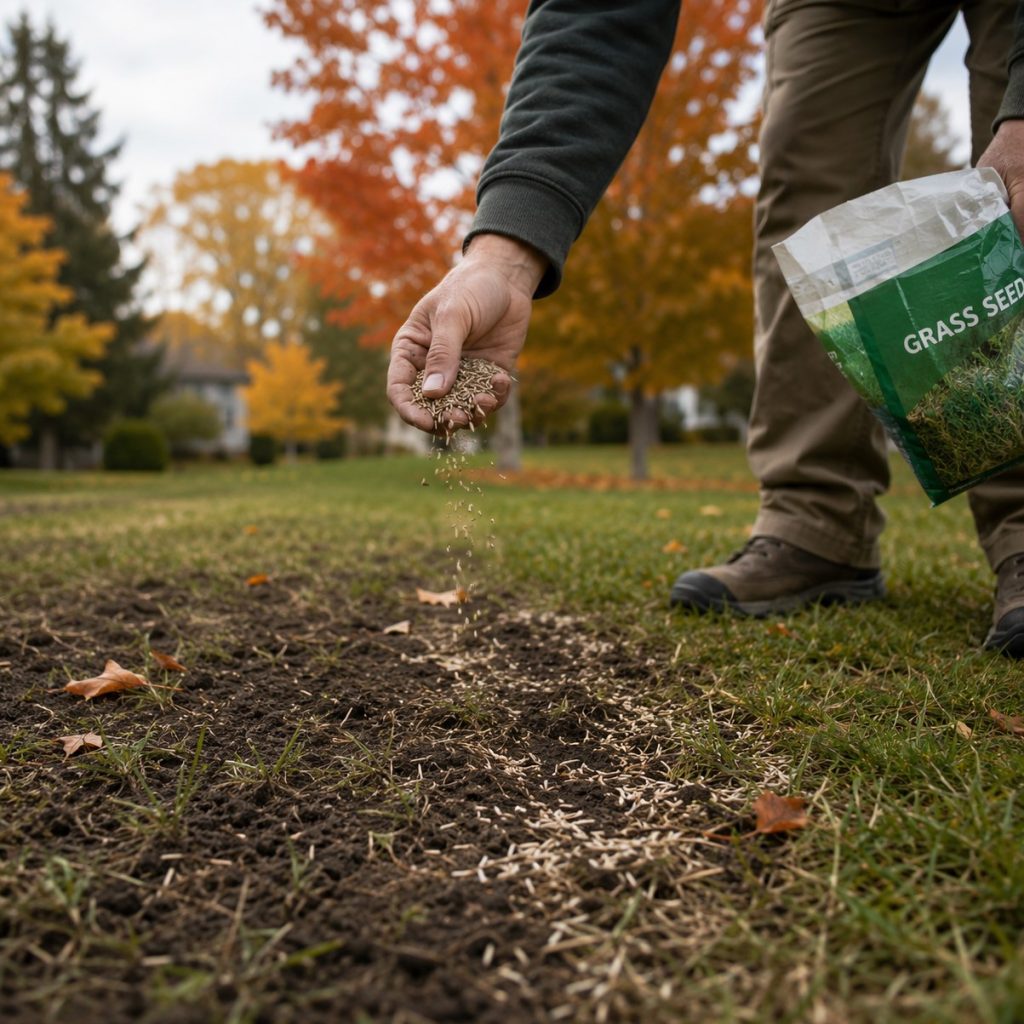
That is exactly why fall is such a great time to take action. With cooler temperatures, more consistent moisture and less competition from summer weeds, grass seed has ideal conditions to germinate, establish strong roots and begin filling in those problem areas before winter arrives.
The Best & Easiest Way To Plant Grass Seed In The Fall
How To Prepare Your Soil For Fall Planting
Whether you are filling in bare spots or seeding an entire lawn, there are a couple of big tips that can make a huge difference in getting your seed to take. And the first and biggest of those tips is making sure you start by preparing the soil for seed correctly.
One of the biggest keys of all when planting grass seed is preparing the soil. Simply throwing down seed on top of your lawn’s bare spots will result in disappointing results. Instead, it’s extremely important to first take the time to remove any existing grass or thatch that might exist in the area – and to loosen the soil below.
For small patches, this can be done quite quickly and easily with a shovel. For larger areas or even entire lawns, a rototiller is usually best.
But beyond just loosening up the existing soil, this is where adding in a bit of energy and life to your dirt can pay huge dividends. And by far, the easiest and best way to add that power is with compost or compost blend.
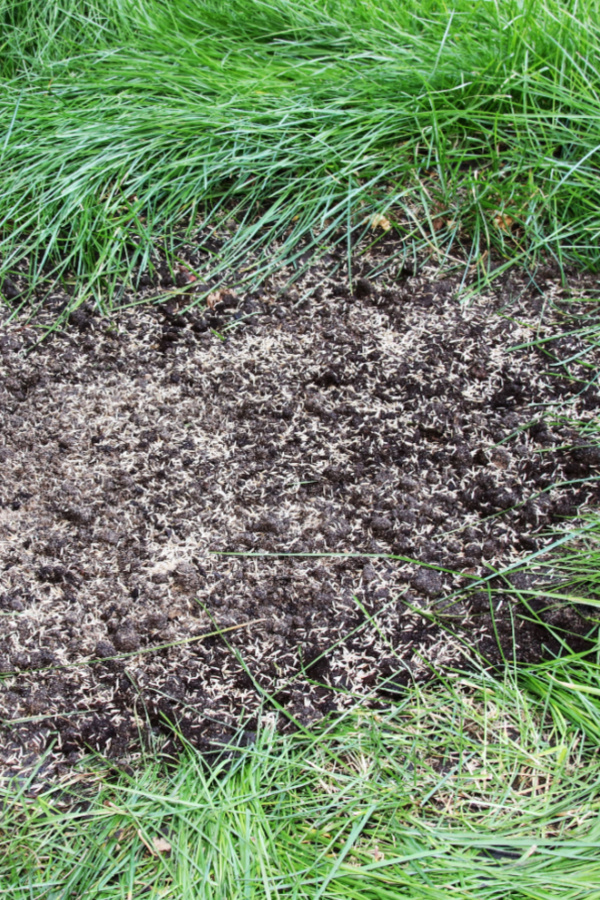
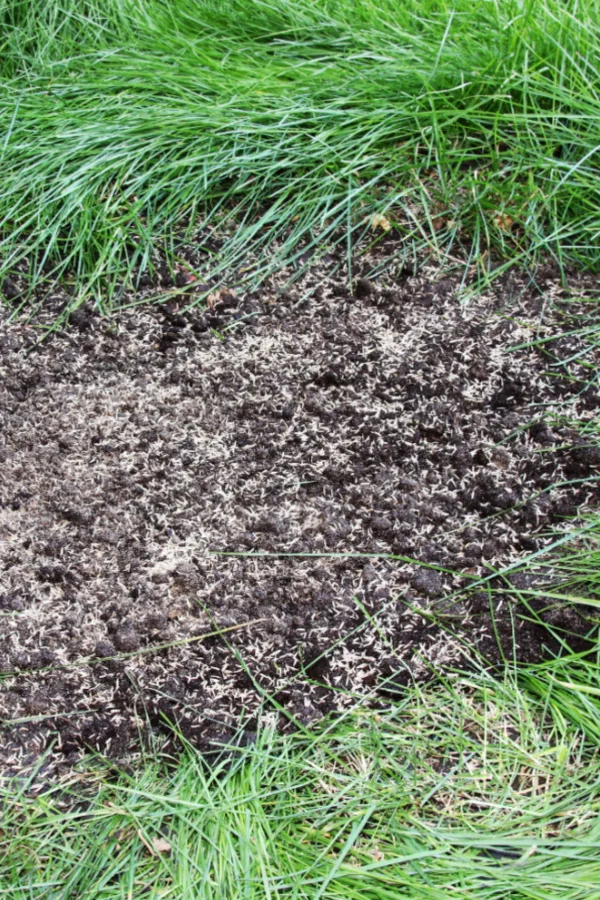
Why You Need To Add Compost To Your Soil
For best results, once your soil is clear, cover the soil with an inch or two of compost. As for what type is best, if you have a home compost pile by all means use that free compost! But if you don’t, any bagged variety of compost or compost blend (composted manure, mushrooms, etc.) will work well. Affiliate Product Link: Garden Magic Compost and Manure For Lawn and Garden
Next, using a rake, mix the compost into the soil below so that the first few inches are an equal mix of soil and compost.
Compost not only feeds the grass with its nutrients, it also helps hold moisture in the soil. And when it comes to growing grass – moisture is vital to success! This one little step will allow your grass seed to have the nutrients and moisture the seed needs to germinate and grow.
Adding In A Cover Crop Seed – Big Secret When You Plant Grass Seed In The Fall!
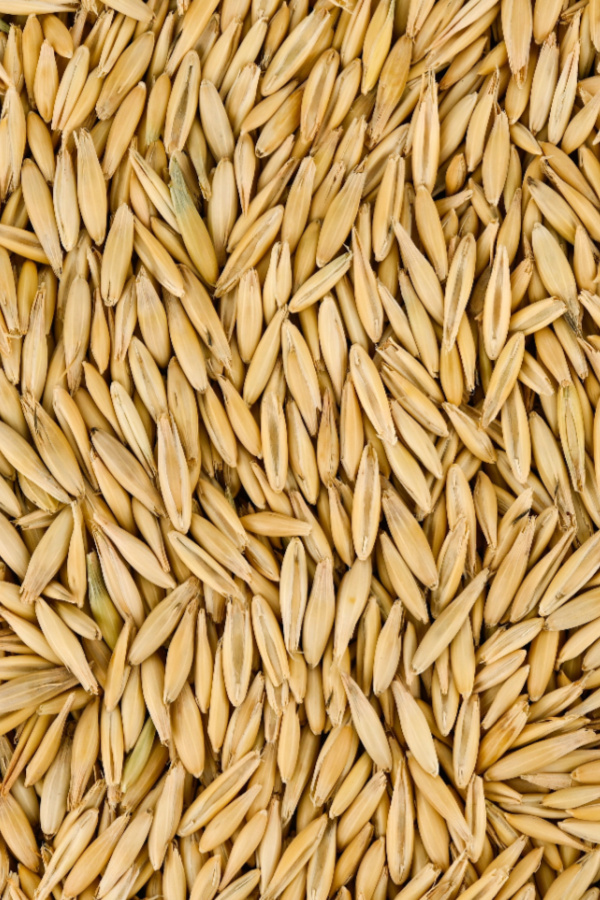
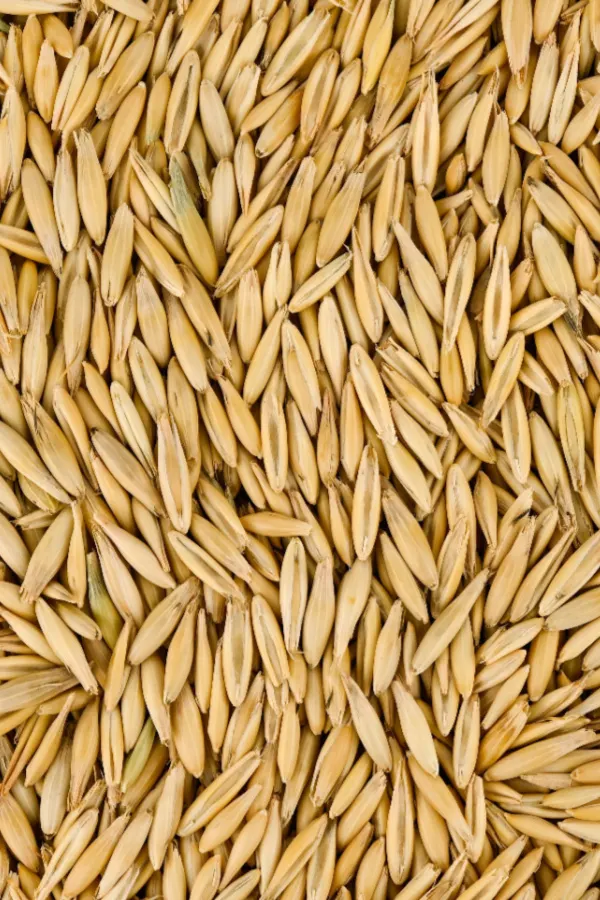
The second secret to success when planting grass seed is to mix in a cover crop seed along with your grass seed mix. For this, cereal rye or oats are two of the best choices.
Cover crop seeds like rye and oats germinate quickly in the soil. Sometimes in as little as three to four days in warm soil. This helps to provide cover and shade for your grass seed to then establish. But just as important, it also helps cover bare soil – making it hard for weed seeds to find a home.
Listen In To Our Latest Podcast Below!


Because the annual cover crop seed grows so fast, it acts as a mulch, helping to hold moisture in. All the while, it also keeps your grass seed protected from the sun and hard rains and storms.
So what happens to the annual cover crop over time? Just as in a garden setting, after it is mowed a few times, it will begin to die off. And as the cover crop dies off, your lawn seed thickens and fill in.
It truly is the perfect relationship – because as the cover crop decays, it adds organic matter and more power to the soil, helping power your grass seed even more. See our article: How To Plant A Fall Garden Cover Crop – Recharge Your Soil & Stop Weeds!
So how much cover crop seed should you mix in with your grass seed? A good rule of thumb is to mix one pound of cover crop seed with every four to five pounds of grass seed. The good news? Cover crop seed is fairly inexpensive when compared to grass seed! Affiliate Product Link: Thunder Acres Non GMO, Certified Organic, Oat seed (5 lb.)
Water Smart!
Last but not least, there is no way around it, you have to give new grass seed water. And it has to be at regular intervals! One of the reasons fall is the best time to plant grass seed is usually there is more rain. But you need to water if there isn’t!
All too often, gardeners put down seed and water it in – never to water it again. And all too often, the new seed will fail. In order to establish and grow thick roots, seeds must have regular water. Especially for the first two to four weeks after planting.
If nature isn’t providing it, it’s important to water the seed at least every other day during this time. When watering spots and patches, soak the ground so the water works its way down a few inches in the soil. This will keep the seed happy and healthy – and make all of your hard work pay off!
Here is to using the best time to plant grass this fall to your advantage – and to a great lawn next spring and summer!
The Simple Garden Life
Follow Our Facebook Page For Even More Great Tips! Simple Garden Life Facebook Page
Simple Garden Life is a website dedicated to keeping gardening fun, simple and enjoyable! We publish two new articles each week along with a new garden podcast episode every two weeks. This article may contain affiliate links.